As the global resource landscape undergoes a profound transformation in 2026, critical minerals have become a focal point of strategic competition among nations. For resource-rich Canada, this presents both a historic opportunity and a formidable strategic dilemma. Market analysis highlights silver, gold, uranium, and copper as the resources set to lead the sector in the coming year.
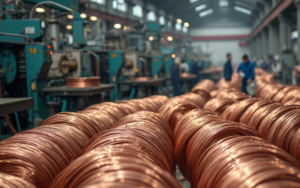
A recent S&P Global report, Copper in the Age of AI, underscores a structural shift in demand. Exponential growth in artificial intelligence, defense, and robotics industries is driving a transformation, with global annual copper demand projected to surge by 50% to 42 million tonnes by 2040. However, the supply side faces severe constraints. Global production is expected to peak around 33 million tonnes by 2030, leading to an annual deficit exceeding 10 million tonnes. Long development timelines, high costs, and a concentrated supply chain render the market acutely vulnerable amidst accelerating demand.
The October 2025 “METALS 100” interview reveals that FireFly Metals Ltd (ASX: FFM, TSX :FFM) is an emerging copper-gold company focused on advancing the high-grade Green Bay Copper-Gold project in Newfoundland, Canada. The Green Bay Copper-Gold Project currently hosts a mineral resource prepared in accordance with the JORC Code (2012 Edition) and NI 43-101 of 24.4Mt of measured and indicated resources at 1.9% for 460Kt CuEq and 34.5Mt of inferred resources at 2% for 690Kt CuEq. The Company has a clear strategy to rapidly grow the copper-gold resource to demonstrate a globally significant copper-gold asset. FireFly has commenced a 130,000m diamond drilling program.
The investment thesis for other key minerals remains robust:
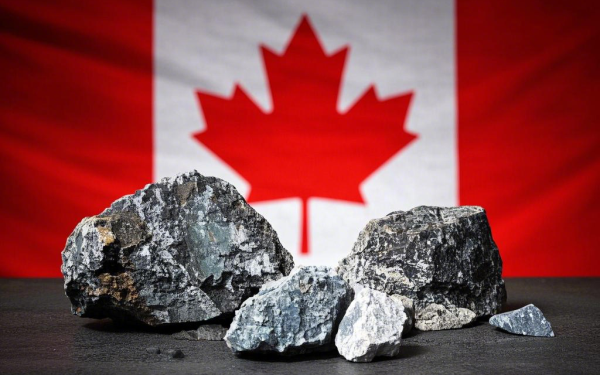
Given copper’s compelling demand outlook, it is rightly among the six minerals prioritized under Canada’s Critical Minerals Strategy—lithium, graphite, nickel, cobalt, copper, and rare earth elements. The strategy aims to seize a “generational opportunity” to build integrated domestic supply chains and reduce foreign dependence.
Yet, a gap exists between strategic vision and resource reality. As Brooke Thackray, research analyst at Global X, notes, many niche critical minerals markets remain embryonic, requiring time and deeper government intervention to catalyze development, mirroring the support that propelled the uranium sector.
A more fundamental critique comes from Jack M. Mintz, public policy analyst at the C.D. Howe Institute. He argues Canada should concentrate on minerals where it holds large reserves and proven production capacity, rather than adhering to a broad list. Using lithium as an example, he points out that global resources and production are concentrated in the “Lithium Triangle” of Bolivia, Chile, and Argentina, making Canada a less natural focal point. In contrast, minerals like nickel, zinc, uranium, potash, iron ore, gold, and copper represent areas of greater inherent Canadian advantage and potential—though some, like uranium and copper, were not initially on the critical list or were added later.
As 2026 unfolds, Canada stands at a strategic crossroads. One path involves pursuing the ambitious, comprehensive list to build end-to-end industries. The alternative is to sharpen focus, leveraging innate resource endowment to solidify and expand leadership in domains of existing strength and certain future demand—such as copper. The looming structural shortage in global copper markets elevates this choice beyond industrial policy, positioning it as a decisive factor in Canada’s ability to capture the core economic benefits of the energy transition and the tech revolution. Canada’s decision will serve as a key case study in how resource nations navigate the new era of mineral competition.