
1911 Gold Corporation (TSXV: AUMB; OTCQX: AUMBF)
1911 Gold is Manitoba’s Gold Standard - Ready, Permitted and High-Grade 1911 Gold is an Emerging Gold Producer, with Significant Cash Flow Generation and District-Scale Growth Potential
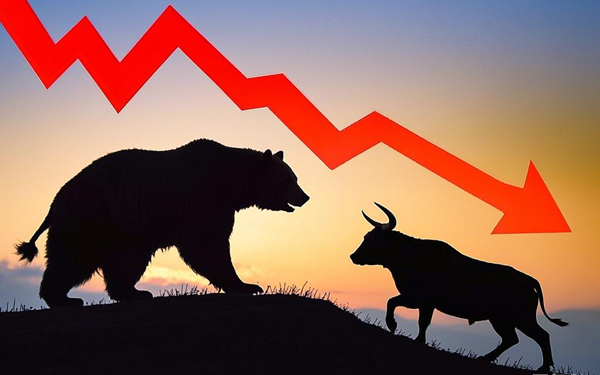
A seismic sell-off ripped through global precious metals markets in less than 24 hours, wiping out weeks of frenzied gains and leaving traders reeling.
On Friday, spot gold plunged to a low of $4,941.50 per ounce, shedding over 6% in a single session. Silver faced an even more brutal fate, collapsing 26% in its worst day on record. The violence of the reversal was staggering, coming just a day after gold had scaled a peak of $5,595, silver soared above $121, and copper breached $14,500 per tonne.
“In my career it’s definitely the wildest that I have seen,” said Dominik Sperzel, head of trading at leading bullion refiner Heraeus Precious Metals. “Gold is a symbol of stability, but such a move is not a symbol of stability.”
The collapse began with news from Washington. Reports from Bloomberg and other outlets indicated President Donald Trump planned to nominate Kevin Warsh as the next Chair of the Federal Reserve. The news bolstered the US dollar, sending the dollar-denominated metals complex into a tailspin.
Markets interpreted the potential nomination as a hawkish signal. Thu Lan Nguyen, head of commodity and FX research at Commerzbank, noted Warsh is seen as a less dovish choice than former frontrunner Kevin Hassett. While Nguyen cautioned it was too early to label Warsh definitively hawkish, she highlighted a key market concern: the perceived degree of loyalty to the president.
“Trump has made relatively clear what he wants from a new Fed chair,” Nguyen said. “And if that Fed chair doesn’t deliver, the attacks on the Fed are unlikely to subside.” She argued this pressure actually raises the probability of the Fed cutting rates more than currently expected—a long-term support for gold. Friday’s plunge, in her view, looked like a market “simply waiting for an opportunity to take profits after the rapid price rise.”
However, the Fed news may have merely lit the fuse on a powder keg built over weeks. The core engine driving metals prices parabolic, untethered from fundamental gravity, has been a tidal wave of speculative capital from China. From retail investors to large equity funds, Chinese money flooded into commodity markets, pushing prices to unprecedented highs. The rally was further supercharged by trend-following commodity trading advisors (CTAs) piling in.
“We had identified about three or four weeks ago that it turned into a momentum trade, not a fundamental trade,” said Jay Hatfield, chief investment officer at hedge fund Infrastructure Capital Advisors. “We were just riding it, waiting for this type of thing to happen.”
The frenzy was most extreme in the smaller silver market, where volatility became explosive. On Friday, the iShares Silver Trust (SLV), the world’s largest silver ETF, saw turnover surpass $40 billion, making it one of the planet’s most traded securities. Months ago, its daily turnover rarely exceeded $2 billion.
The pivotal turn came late Thursday after the US market open. As the dollar firmed and gold initially dipped, Chinese investors—who had been the relentless buyers powering the Asian-session rallies—this time chose to cash in. “China sold and now we’re suffering the consequences,” said Alexander Campbell, former head of commodities at Bridgewater Associates.
Friday’s full-blown crash was cemented. European and US traders, who had been working around the clock to monitor the Asian action, watched the momentum violently reverse. At the world’s largest coin conference in Germany last week, executives stared in silence at their phones as the crisis unfolded. Nicky Shiels, head of metals strategy at MKS PAMP SA, described the market with words like “parabolic,” “frenzied,” and “untradeable.” She said January 2026 would be remembered as “the most volatile month in precious metals history.”
In the wake of the crash, the market’s focus has sharply returned to China. Traders worldwide are scrutinizing the Shanghai market’s reopening, watching to see if Chinese demand can revive after the shock. Daily price limits of 16%-19% on Chinese silver contracts mean Shanghai prices may need to play catch-up with the global rout. However, the pullback ahead of the Lunar New Year—a traditional period of strong physical demand—may offer a potential entry point for retail investors who missed the earlier rally.
According to traders in China, tightness in silver eased somewhat in the major bullion hub of Shuibei over the weekend, with more selling than buying, but no panic selling emerged. Meanwhile, several Chinese banks announced fresh measures on Friday to curb risks in retail gold accumulation products, potentially further cooling speculative fervor.
“Gold is relatively strong; I see a lot of dip buyers coming in the past two days to purchase jewelries and bars before Lunar New Year,” said Liu Shunmin, head of risk at Shenzhen Guoxing Precious Metal Co. “Whereas for silver, there’s a strong inclination to stand on the sidelines.”
A financial storm fueled by intertwining Sino-American factors has temporarily abated, but its root causes remain. The future independence of the Fed and the sentiment of investors in both the US and China continue to hang over the precious metals market like a sword of Damocles. This historic meltdown may just be the opening act of a new era of extreme volatility.