
SLAM Exploration Ltd. (TSXV: SXL)
‘Exploring for critical elements and precious metals in New Brunswick, Canada.’
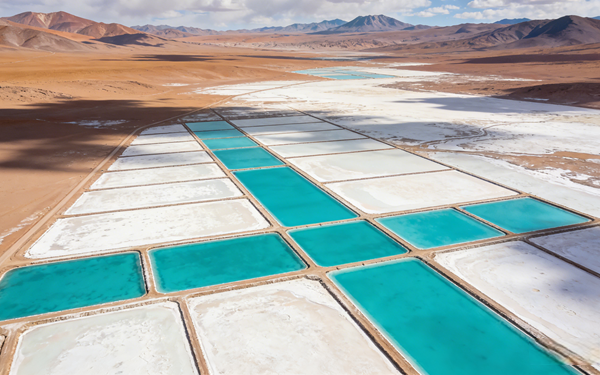
The signing of a joint statement on critical minerals between Chile and the United States is far from a routine diplomatic gesture. Behind this seemingly bilateral framework, Washington is quietly weaving a strategic resource network across Latin America—from the salt flats of the “Lithium Triangle” to Brazil’s rare earth deposits.
With unprecedented coordination between US capital and policy tools, the US is carving into a supply chain long dominated by China.
Chile’s foreign ministry announced Thursday that it had signed a joint declaration with the US to initiate discussions on rare earths and other critical minerals. The first meeting will take place within two weeks, with areas of potential coordination spanning public and private financing, scrap management for mineral recycling, and exploration for new projects—a scope far broader than traditional trade pacts.
The timing is telling. Right-wing politician José Antonio Kast was sworn in as Chile’s president on Wednesday, and the very next day he personally witnessed the signing ceremony in Santiago. US Deputy Secretary of State Christopher Landau put it bluntly: “I believe there is much we can do with the United States and Chile to strengthen the supply chains of these minerals.”
Chile’s strategic value is self-evident: it is the world’s largest copper producer and second-largest lithium producer. Copper is the bedrock of electrification, lithium the heart of batteries—both are designated as critical minerals under the US Defense Production Act. The Trump administration has been pushing to reduce reliance on China for a range of minerals that underpin modern industry, from electric vehicles and semiconductors to defense systems.
US capital is already entrenched. Albemarle, based in Charlotte, North Carolina, has produced lithium in Chile’s northern Atacama region for more than 50 years, making it the world’s top lithium producer. EnergyX, a Puerto Rico-based lithium technology startup backed by General Motors, is planning a $1.1 billion lithium facility in Chile slated to come online in 2028 with an annual capacity of 50,000 metric tons. CEO Teague Egan, who met Kast at a Miami summit last Saturday, called it “a good first step on Kast’s first day in office to sign something of a framework agreement with the US.”
Data shows that since January 2025, the US has poured more than $1 billion into critical minerals investments across Latin America. A report by law firm White & Case notes that the spending surge under the second Trump administration reflects a fundamental shift: critical minerals are no longer just commodities tied to the energy transition but matters of national and energy security.
Rebecca Campbell, the firm’s global head of mining and metals, and project financing partner Fernando J. de la Hoz observe that projects in Brazil and Argentina are drawing direct interest from US agencies and multilateral lenders through loans, equity stakes, and structured offtake agreements designed to channel output into US-aligned supply chains.
Argentina has emerged as a policy-driven investment hotspot. The country, which hosts the largest number of lithium projects in Latin America, launched the Incentive Regime for Large Investments (RIGI) in July 2024, offering tax, customs, and exchange-rate stability for projects worth more than $200 million. Rio Tinto became the first company approved under the framework in May 2025 for a $2.5 billion lithium project in Salta. National lithium output capacity has jumped from 75,500 tonnes per year in 2023 to about 186,000 tonnes in 2025, with the government targeting 658,000 tonnes by 2035.
Meanwhile, the Inter-American Development Bank (IDB) has approved a $100 million loan for a $2.5 billion lithium project in Argentina, and the US International Development Finance Corporation (DFC) is considering a $465 million investment to expand Serra Verde’s rare earth operations in Brazil’s Goiás state.
Brazil holds the world’s second-largest rare earth reserves, after China. The “Lithium Valley” project cluster in Minas Gerais is taking shape, yet despite accounting for about 23.3% of global reserves, Brazil produces only 0.02% of the world’s rare earths—underscoring immense growth potential. “Development of rare earth and critical minerals projects is no longer just a matter of energy transition, but rather, energy security,” Tiago Abreu, chief development officer of Brazilian Rare Earths, told delegates at a mining summit in Belo Horizonte in June 2025.
Copper will remain the anchor of Latin America’s mining landscape. Global copper demand is projected to nearly double by 2035. Several copper projects in Chile alone are expected to begin operating next year, with combined investment exceeding $7 billion.
Market conditions are improving—battery-grade lithium carbonate traded near $18,200 per tonne in early January 2026, rebounding as grid-scale energy storage expands—but the US strategy extends far beyond price cycles.
On the geopolitical scale, every investment is reshaping supply chain allegiances. Chinese companies still control more than 90% of global rare earth processing capacity. Yet Campbell and de la Hoz note that Latin American governments are pragmatically balancing: they are absorbing capital and technology from both the US and China while accelerating domestic processing capabilities to capture more value from their resources. “We are hearing from countries from left to right, independent of political inclination, that this is the moment to increase the value added to their critical minerals,” IDB President Ilan Goldfajn told the Financial Times in December.
Geopolitics is now directly influencing mining transactions. MMG’s proposed acquisition of Anglo American’s nickel assets in Brazil is undergoing a Phase II merger review by European regulators—a case illustrating how decisions in Brussels or Washington can shape mining deals thousands of kilometers away.
From Chile to Argentina, from Brazil to the Lithium Triangle, the US is re-engaging with Latin American mining in a systematic way. This is no longer a patchwork of bilateral deals but a concerted effort to reconfigure critical mineral supply chains. In an era where resource nationalism coexists with environmental compliance, government-backed financing is mitigating some investment risks, but the real shift is the elevation of minerals from commodities to strategic assets.
Latin America stands at the center of the global energy game. And Washington’s chessboard is only just being laid out.