Brookfield Asset Management Ltd. (BAM) has teamed up with Québec’s pension fund giant La Caisse to acquire renewable power producer Boralex Inc. in a deal valued at approximately $3.8 billion in equity. Yet, as Brookfield itself trades 30% below its all-time high with a dividend yield of 4.7%, the transaction may be pointing to a broader opportunity that investors are overlooking.
Brookfield Asset Management and La Caisse have agreed to acquire Boralex for $37.25 per share in cash, representing an equity value of roughly $3.8 billion and a total enterprise value of $9 billion including debt.
As Boralex’s largest existing shareholder with a roughly 15% stake, La Caisse will reinvest in the newly private company, ending up with a 30% pro forma ownership. Brookfield, alongside its institutional partners including Brookfield Renewable Partners, will hold the remaining 70%. The deal is expected to close in the fourth quarter of this year.
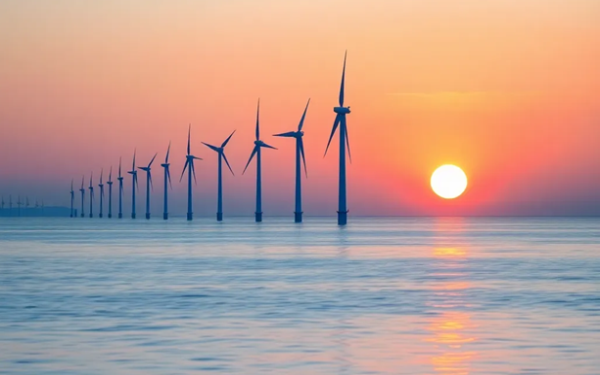
Boralex brings a portfolio of renewable energy assets across Canada, France, the U.S., and the U.K. For Brookfield, the acquisition adds approximately four gigawatts of operating clean power capacity to its existing global fleet of 46 gigawatts, plus another eight gigawatts of projects under development. Boralex CEO Patrick Decostre said joining Brookfield will provide “the significant capital deployment and financial flexibility” needed to accelerate growth.
The deal comes after a multi-year pullback in renewable energy valuations. Boralex’s share price topped $55 in early 2021, but had fallen by more than half as recently as last week, weighed down by permitting challenges and policy uncertainty.
However, the sector’s fortunes have begun to reverse over the past year. Surging electricity demand from artificial intelligence data centers is reviving investor interest in power generation assets across the board. Jehangir Vevaina, Brookfield’s chief investment officer for energy, noted that the fundamentals for clean energy remain strong, and the firm is adding development capabilities in key strategic markets to capture that growth.
While the Boralex acquisition is making headlines, Brookfield itself is trading at a valuation that warrants a closer look.
Since early 2025, Brookfield Asset Management has been caught in a broader sell-off across the asset management sector. Concerns over fee pressure, rising costs, and intensifying competition have pushed the stock down roughly 30% from its peak. The shares currently trade around $59, pushing the dividend yield to an attractive 4.7%.
Yet the operational picture tells a different story. In 2025, Brookfield’s fee-related revenues climbed 17% year-over-year to US$5.5 billion, while fee-related earnings rose 20% to US$3.1 billion. More importantly, distributable earnings—a key metric that focuses on actual cash generation—increased 14% to US$2.7 billion. On a per-share basis, fee-related earnings grew by approximately 22%.
For income-focused investors, distributable earnings offer a clearer lens than net income when assessing dividend sustainability, as it excludes non-cash items and reflects real cash flow. Brookfield’s consistent growth on this front provides solid support for its 4.7% yield.
The Boralex acquisition underscores Brookfield’s continued commitment to deploying capital in long-term growth sectors like clean energy. Meanwhile, the market’s broader pessimism toward the asset management industry appears to be at odds with the company’s underlying cash flow strength.
For long-term investors, this disconnect between price and performance may represent an opportunity to buy a globally diversified alternative asset manager—with exposure to infrastructure, real estate, private equity, and renewables—at a discounted valuation, all while collecting a growing 4.7% dividend.