American Tungsten Corp. (TSXV: TUNG, OTCQB: DEMRF)
Building America’s Defense Critical Metals Supply
On Tuesday, Almonty Industries (TSX:AII,NASDAQ:ALM)—the largest tungsten producer outside of China’s sphere of influence—announced it is relocating its corporate headquarters from Toronto to Dillon, Montana. The move lands squarely in a critical window: the company’s Sangdong mine in South Korea has just roared back to life after a 30-year slumber, and its Gentung project in Montana is on the cusp of restarting production.
While framed as an administrative address change, the shift represents a calculated, three-dimensional restructuring of the company’s identity, its capital flows, and its grip on a critical defense supply chain.
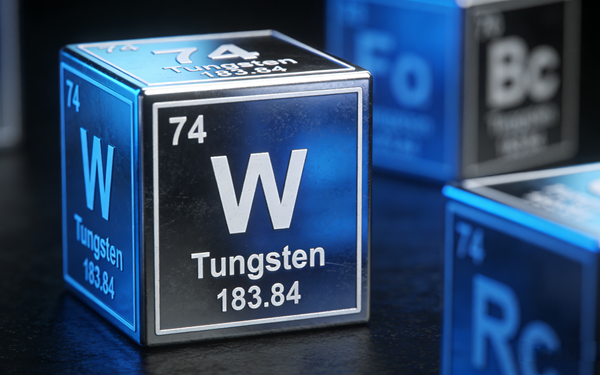
Tungsten, a metal defined by its extreme density and the highest melting point of any element, is non-negotiable in modern warfare and industry. It forms the core of armor-piercing munitions, balances missile guidance systems, and hardens cutting tools. Yet, U.S. commercial production collapsed a decade ago under the weight of cheap imports, leaving the defense industrial base perilously reliant on foreign sources.
Almonty CEO Lewis Black did not mince words in the relocation announcement: “Our investors, customers, and strategic partners are here because they recognize the urgency of building a Western tungsten supply chain free from Chinese dependence.”
By planting its flag in Montana, Almonty is shedding its skin as a “Canadian company with U.S. assets” and emerging as a “U.S. company rooted in Montana soil.” In the opaque world of defense procurement, this identity shift is currency. It elevates the company’s standing in Pentagon appropriation discussions, secures a louder voice at the Defense Department’s Critical Minerals Forum, and, crucially, provides the political cover for contractors to source material from a “domestic” champion. For a firm that controls roughly 40% of non-Chinese tungsten output via the Sangdong mine alone, this new American passport is the difference between being a mine operator and being a strategic national asset.
Trace Almonty’s capital markets trajectory over the past year, and the relocation appears less a choice than an inevitable convergence.
In July 2025, the company pulled in a $90 million oversubscribed IPO on the Nasdaq. By December, it had tapped the markets again for a $129 million follow-on financing. The U.S. capital markets demonstrated a voracious appetite—and a premium liquidity multiple—for the “de-risking” mineral narrative that the Toronto Stock Exchange simply could not match.
The acquisition of the Gentung project (formerly a Union Carbide asset) adds a layer of narrative elegance to the capital structure. The project sits in Montana, complete with existing water rights and infrastructure. By situating the C-suite atop the orebody, Almonty completes a tidy capital loop. The signal to Wall Street is unambiguous: Money raised in the U.S. will be deployed on U.S. soil, servicing U.S. defense needs. This geographic and financial interlock is not merely a compliance checkbox; it is the essential script for sustaining a valuation premium in the defense-tech mining sector.
The audacity to pivot the corporate center of gravity westward is ultimately anchored in tangible production metrics.
Just last month in Gangwon Province, South Korea, the legendary Sangdong mine completed Phase 1 commissioning. Historically a dominant force in global supply, the mine is now processing 640,000 tons of ore annually to yield 2,300 tons of tungsten concentrate. A Phase 2 expansion, slated for 2027, will double that throughput to 4,600 tons per year. As a standalone asset, Sangdong is poised to satisfy roughly 40% of global tungsten demand originating outside of China.
Meanwhile, the Gentung project in Montana is on track to resume production imminently. The operational model is a masterclass in supply chain control: Asian-mined concentrate travels by sea to the U.S. West Coast, where it is priced, allocated, and distributed by a company whose executive team now sits in Montana. The relocation plants Almonty’s command post firmly in the Rockies, establishing a forward operating base for engagement with the defense-industrial complex well before Gentung’s first ore is milled.
Almonty’s migration is a textbook illustration of resource weaponization in the post-globalization era. While the coordinates of a mine are a matter of geology, the coordinates of a corporate headquarters are now a matter of political economy.
In Toronto, Almonty was a well-run mining operator. In Montana, it is positioned to become the arbiter of the Western tungsten supply chain. Challenges remain—permitting for Gentung, cost discipline at Sangdong, and the ever-present volatility of commodity prices. But for now, in a script written jointly by capital markets and the Department of Defense, Almonty has secured the most prominent role on the stage.