

Southern Silver Exploration Corp. (TSXV: SSV, SSEV: SSVCL, OTCQX: SSVFF)
Southern Silver, a low-risk junior development company with substantial upside potential that is emerging as one of the premier Ag-Pb-Zn companies in Mexico
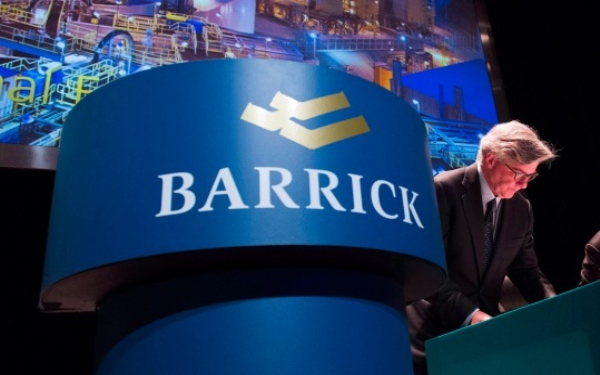
Driven by factors such as gold prices soaring to historic highs, geopolitical tensions, and economic and tariff-related uncertainties, Barrick Mining Corporation’s (B) Class B shares have risen a cumulative 136% over the past year. The company has achieved strong earnings performance, benefiting from a significant increase in realized gold prices.
Over the past year, Barrick Mining has outperformed the S&P 500’s 33.9% growth. During the same period, its gold mining peers Newmont Corporation (NEM), Kinross Gold Corporation (KGC), and Agnico Eagle Mines Limited (AEM) rose 154.2%, 163%, and 109.3%, respectively.
From a technical perspective, Barrick Mining’s stock fell below its 50-day simple moving average on March 3, 2026, but remains above its 200-day simple moving average, indicating a long-term upward trend. Barrick is making steady progress on key growth projects that are expected to significantly boost production. Its major gold and copper projects, such as Goldrush, the Pueblo Viejo plant expansion and mine life extension, Fourmile, the Lumwana Super Pit, and Reko Diq, are all advancing on schedule and within budget.
As of the end of the fourth quarter of 2025, Barrick held approximately $6.7 billion in cash and cash equivalents. In the fourth quarter, it generated strong operating cash flow of about $2.7 billion, a 13% year-over-year increase, while free cash flow rose 9% year-over-year to approximately $1.6 billion. For the full year of 2025, operating cash flow surged 71% to about $7.7 billion, and free cash flow jumped 194% to $3.9 billion. In 2025, Barrick returned $2.4 billion to shareholders through dividends and buybacks, including $1.5 billion in share repurchases. In the fourth quarter, the company raised its dividend to 42 cents per share, a 140% increase from the previous quarter. Barrick also announced a new dividend policy targeting an annualized payout of 50% of attributable free cash flow. Based on the current share price, the dividend yield is 4%, the payout ratio is 29%, and the five-year annualized dividend growth rate is approximately 13.3%.
Although gold prices have retreated from their historic highs at the beginning of the year, they remain at supportive levels. After gold prices surged about 65% in 2025, the strong momentum continued into early 2026. Geopolitical tensions, a weaker U.S. dollar, and concerns over Federal Reserve independence pushed gold prices to a record high of nearly $5,600 per ounce. Subsequently, due to profit-taking and a rebound in the U.S. dollar, gold prices briefly corrected below $4,900 per ounce, but later rebounded above $5,000. In early March, driven by safe-haven demand from a joint U.S.-Israeli strike on Iran, gold prices again broke above $5,400 per ounce. Since then, prices have retreated due to a stronger U.S. dollar and inflation concerns triggered by surging oil prices. Safe-haven demand arising from geopolitical tensions such as the Middle East conflict, along with macroeconomic uncertainties, is expected to support future gold price movements as central banks continue to purchase gold.
Barrick faces rising cost pressures, which could weigh on its margins. In the fourth quarter, total cash costs per ounce of gold and all-in sustaining costs rose approximately 15% and 9% year-over-year, respectively. For the full year 2025, all-in sustaining costs were $1,637 per ounce, up 10% year-over-year. The company expects all-in sustaining costs for 2026 to range between $1,760 and $1,950 per ounce, with cash costs expected between $1,330 and $1,470 per ounce, both higher than 2025 levels. Declining ore grades, rising prices of key consumables, and higher gold price assumptions are the main reasons for the cost increase.
Over the past 60 days, consensus estimates for Barrick’s 2026 earnings have been revised upward, with an expected year-over-year increase of 50.8%. Barrick’s stock currently trades at a forward price-to-earnings ratio of 10.95x, representing a discount of about 10% to the industry average of 12.17x, with a valuation lower than that of Agnico Eagle, Newmont, and Kinross Gold.
In summary, Barrick Mining is well-positioned with favorable factors including production growth initiatives, a strong balance sheet, robust earnings prospects, attractive valuation, and a healthy dividend yield. High gold prices will further support its margins and cash flow. However, rising production costs and weak production outlook are risk factors to watch. For investors already holding the stock, continuing to hold these shares is a relatively prudent choice.