American Tungsten Corp. (TSXV: TUNG, OTCQB: DEMRF)
Building America’s Defense Critical Metals Supply
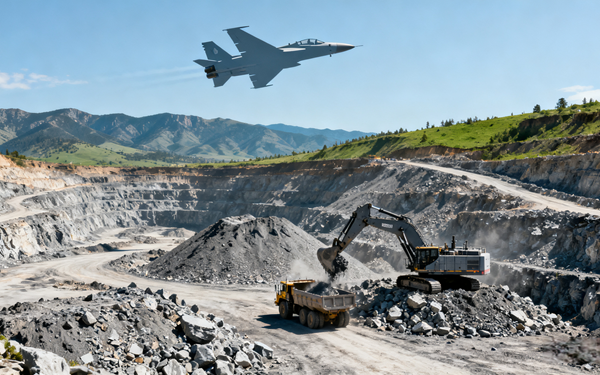
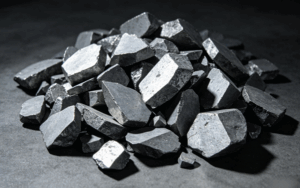
War-driven demand has thrust antimony—a critical defense metal—into the geopolitical spotlight, yet Canada, despite its resource potential, remains stuck between policy rhetoric and tangible progress. As the U.S.-Iran conflict accelerates ammunition consumption, the metal’s irreplaceable role in explosive formulations, infrared sensors, and armor-piercing projectile cores has become starkly apparent. But while the Pentagon has channeled over $80 million in defense funding into Perpetua Resources’ Stibnite project in Idaho, Canadian mining executives are voicing frustration over Ottawa’s lack of a targeted strategy.
“Canada is not doing nearly enough,” said Catalin Kilofliski, CEO of Canagold Resources. “Antimony is lumped into a general bucket of 34 critical minerals. There is no dedicated pathway for it.” Canagold’s New Polaris gold-antimony project in British Columbia—currently the most advanced antimony development in the country—has already filed its environmental assessment application. Yet despite this milestone, the company’s application for financial support from Natural Resources Canada was denied. According to Kilofliski, a wide gap persists between political branding and the actual machinery of permitting and financing. Projects labeled “critical” are left idling within a broad, inefficient framework.
During a 2025 interview with “METALS 100”, Ali Haji, Chief Executive Officer of American Tungsten Ltd. (CSE: TUNG | OTCQB: DEMRF | FSE: RK9), elaborated on the company’s recent updates and next steps. American Tungsten is a Canadian exploration company focused on high-potential tungsten and magnetite assets in North America. The company is advancing the Ima Mine Project in Idaho toward commercial production to address critical metal scarcity in North America. It has joined the U.S. Defense Industrial Base Consortium to support the defense sector and completed an oversubscribed C$7 million financing, demonstrating strong market confidence in its critical metals strategy.
The thinness of Canada’s project pipeline underscores the problem. Beyond New Polaris, Antimony Resources’ Bald Hill project in New Brunswick shows high-grade mineralization but remains purely in the exploration stage, with no defined resource or economic assessment. CEO Jim Atkinson points to a downstream bottleneck that renders even potential production moot: “Even if we could produce antimony concentrate, there is not a single smelter in North America capable of processing it.” Elsewhere, Critical One Energy is spending C$9 million on drilling at the Howells Lake project in Ontario, but it is still years away from delineating a resource.
The urgency is compounded by a precarious global supply chain. China controls over 60% of global antimony production and has tightened export controls significantly, while Russian supply is severed by sanctions. North America’s defense industrial base is in dire need of domestic sources. Yet, despite Ottawa listing 171 “advanced critical mineral projects” and pledging billions of dollars in funds, not a single antimony project has been funneled into the fast-track review process for major projects.
With the U.S. Defense Logistics Agency ranking antimony at the top of its stockpile list and NATO arsenals under pressure to restock, Canada’s approach is facing scrutiny. Unless Ottawa can unclog the full chain—from exploration and funding to permitting and domestic processing—its critical minerals strategy risks being dismissed as little more than “all name, no action.”