Carney Breaks Ground on Matawinie, G7’s Largest Graphite Mine
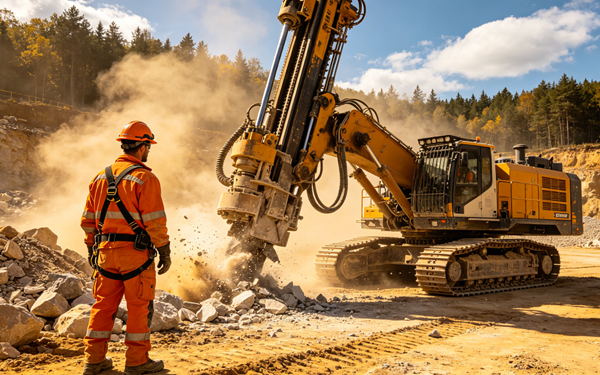
Prime Minister Mark Carney broke ground Tuesday on the G7’s largest graphite mine, a C$2 billion project that will catapult Canada into the top ranks of global suppliers and break China’s stranglehold on the critical mineral powering electric vehicles.
Owned by Nouveau Monde Graphite Inc. (TSX:NOU,NYSE:NMG), the Matawinie mine will produce 106,000 tonnes of natural graphite annually over 25 years once fully operational — eight times Canada’s entire 2024 output of 12,000 tonnes, which accounted for just 0.7% of global supply. The project will create more than 1,000 jobs across engineering and skilled trades, anchoring Quebec’s clean energy transition.
Graphite forms the anode in EV batteries, making it indispensable to the global shift away from fossil fuels. China currently controls 79.4% of worldwide production, with Madagascar a distant second at 5.6%, leaving Western automakers and governments exposed to supply disruptions and geopolitical risks.
“This will make Canada stronger, our international partners more resilient, and build supply chains we control,” Carney told the ceremony north of Montreal. The mine will position Canada as a reliable supplier to allies in Asia, Europe and beyond, with the U.S. — which absorbed 78% of Canada’s natural graphite exports and 56% of synthetic graphite exports in 2024 — set to be the biggest beneficiary.
Construction began just six months after the project was referred to Ottawa’s Major Projects Office, a record for Canadian mining developments. The MPO coordinated four federal departments to fast-track permits, financing and offtake agreements, including a seven-year federal commitment to buy 30,000 tonnes of graphite concentrate annually.
Ottawa also provided a C$459 million financing package via Export Development Canada and the Canada Infrastructure Bank, building on a C$113 million strategic investment from the Canada Growth Fund. An additional C$4.4 million will fund an electric Caterpillar loader to replace diesel-powered equipment and cut emissions.
Matawinie’s defining competitive edge is its fully integrated, low-carbon production model. Ore will be processed at NMG’s planned Bécancour battery materials plant, powered entirely by Quebec’s hydroelectric grid. This end-to-end Canadian supply chain — the first of its kind — will deliver far lower greenhouse gas emissions than conventional graphite production, a critical selling point for ESG-focused automakers.
NMG shares rose 2.7% in Toronto trading Tuesday following the groundbreaking. The company closed a C$426 million financing round last week that gave Italy’s Eni SpA a nearly 12% stake; Canadian and Quebec government funds remain major shareholders with 19% and 18% respectively.
The project has drawn criticism from federal Conservatives, who argue the Liberal government is taking credit for a development that was already well advanced before MPO involvement.
Still, industry analysts view Matawinie as a transformative milestone in Canada’s push to become a global critical minerals powerhouse. As EV demand surges, the mine will help diversify global graphite supply away from China and secure Western nations’ energy transition goals.
China News
Electric Cars
Graphite
Mining