
District Metals Corp. (TSXV:V.DMX. Nasdaq: DMXSE SDB)
Advancing the Largest Undeveloped Uranium Deposit in the World
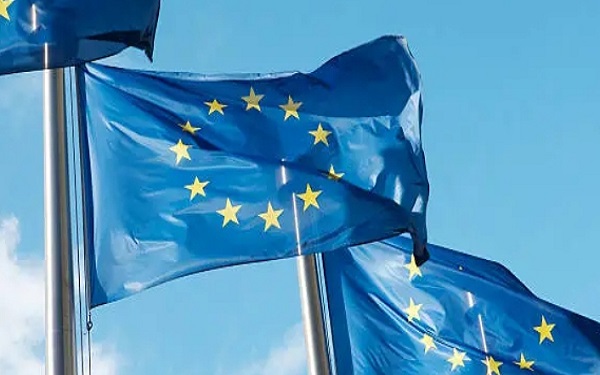
Reuters just reported that the European Union has shortlisted tungsten, rare earths, and gallium for its first joint stockpile, and is negotiating with major European ports, including Rotterdam, on warehousing arrangements. Magnesium is expected to be added to the priority list, with germanium and graphite likely to make the final cut. This initiative is a core component of the EU’s RESourceEU critical raw materials action plan, aimed at reducing over-reliance on China as a single source.
China’s State Council has recently published the Implementation Regulations of the Mineral Resources Law of the People’s Republic of China, which will take effect on June 15. The regulations cover mining rights, detailed rules for exploration and extraction, ecological restoration of mining areas, and mineral resource reserves and emergency response systems. They explicitly stipulate protective mining measures for specific strategic mineral resources designated by the State Council, including planning controls, total output regulation, and restrictions on mining entities.
The European Commission announced its stockpile plan last December, and currently 10 member states are participating in planning groups, led by Italy, France, and Germany. However, the following challenges can never be addressed easily.
Extreme single source supply dependence
The EU’s dependence on critical minerals is extremely high, with sources heavily concentrated in China. Take rare earths: the EU relies on external supply for over 95% of its rare earth elements, the vast majority of which come from China. Its import dependence for magnesium is nearly 100%, with China as the main supplier. In the permanent magnet sector, 93% of the EU’s wind turbine permanent magnets are purchased from Chinese suppliers. It is similarly highly dependent on China for gallium, germanium, graphite, etc. This “single source” structure makes the EU highly vulnerable to trade or geopolitical fluctuations.
Direct pressure from tightening Chinese supply policies
After passing a new Mineral Resources Law in 2024, China has further issued implementing regulations effective June 15, 2026. The regulations clearly impose total output controls, restrict mining entities, and establish a minimum five-year in-situ reserve system for strategic minerals, which cannot be mined or encroached upon without approval from the natural resources authority of the State Council. This means China is not only controlling exports but also limiting total extraction at the source. The EU has already felt the impact of China’s restrictions on gallium and germanium exports, and the upcoming stricter regulations could further tighten the availability of tungsten, rare earths, and other key materials.
Lagging internal stockpile and alternative supply chain development
Although the EU announced its RESourceEU strategy in December 2025, only 10 member states are currently involved in planning, and warehousing, funding, and long-term management mechanisms are not yet in place. France is pushing forward using its G7 presidency, but establishing a permanent secretariat still requires political negotiation. Meanwhile, European domestic mining projects are progressing slowly. For example, the Chvaletice manganese project in the Czech Republic has faced long delays due to permitting and grid connection issues, highlighting administrative barriers and infrastructure shortcomings. Fast-track permitting measures have not yet been fully transposed into national laws.
Urgent needs of defence and high-tech industries
Except for magnesium, the materials on the stockpile shortlist – tungsten, rare earths, etc. – are all on NATO’s list of defence critical elements. From missiles and fighter jets to semiconductors and electric vehicles, these minerals form the backbone of Europe’s defence and high-tech industries. A supply disruption would directly threaten European defence autonomy and the green transition goals. However, Europe’s domestic processing capacity is almost non-existent – China accounts for nearly 90% of global rare earth processing, and an even higher share for gallium and germanium processing.
In summary, the EU faces multiple challenges in the critical minerals sector. Establishing a joint stockpile is a necessary emergency measure, but unless processing capacity gaps and permitting obstacles are fundamentally addressed, Europe’s “resource autonomy” is unlikely to be achieved in the short term.