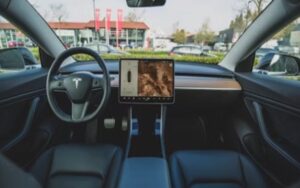
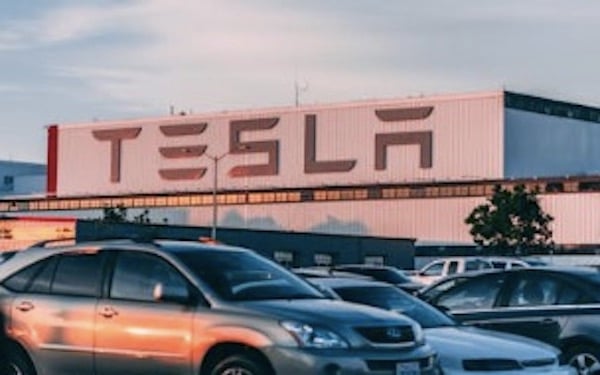
Tesla’s (TSLA) trillion-dollar valuation hinges on its autonomous driving ambitions, which are now facing a reality check. According to the latest database from the Texas Department of Motor Vehicles, Tesla has only 42 operational, authorized robotaxis in the state—less than one-tenth the size of Alphabet’s Waymo fleet. As of the latest count, Waymo has registered 577 autonomous vehicles in Texas, taking a commanding lead.
This week, Texas Senate Bill 2807 officially went into effect, establishing a systematic regulatory framework for commercial autonomous vehicles for the first time. The new law requires operators to obtain authorization from the Department of Motor Vehicles and self-certify that their vehicles meet Level 4 autonomous driving standards, allowing vehicles without steering wheels or pedals to operate on public roads. The department has also launched a tracking tool for autonomous vehicles, publicly disclosing fleet sizes for the first time. This shift means that the commercial deployment of autonomous driving now has a public data benchmark at the government level.
The data shows that Waymo has 577 autonomous vehicles in Texas, ranking first. Since launching commercial services in Austin in March 2025, the company has expanded to four cities, including Dallas and Houston, operating nearly 4,000 autonomous vehicles across the United States. In contrast, Tesla has only 42 vehicles, placing it behind Avride (317 vehicles) and Nuro (47 vehicles), and even trailing Zoox (35 vehicles) and MOIA (12 vehicles). Tesla launched its service in Austin nearly a year ago and has recently expanded to parts of Dallas and Houston. However, this falls significantly short of its founder’s earlier statement that “Austin alone would have 500 vehicles.”
Competition in the autonomous driving industry is shifting from technological rivalry to actual operational capability. Waymo, with its “heavy sensor + high-definition mapping” approach, holds advantages in regulation and stability. Tesla, on the other hand, insists on a pure vision-based solution, which theoretically offers lower hardware costs and faster scalability, but its reliability in adverse weather and complex road conditions remains in question. Notably, Tesla has self-certified its fleet as Level 4 under the new law, but the company has clarified that this applies only to its commercial fleet and does not change the legal status of Level 2 FSD on consumer vehicles.
For a long time, autonomous driving has been central to Musk’s valuation logic. Yet the Texas data reveals that, in the practical phase of commercial deployment, Tesla is still operating at an early testing scale. After nearly a year of operations, only 42 legally authorized vehicles exist in Texas—the state where the company is headquartered—and the fleet size has actually declined over the past 30 days. For investors, the significance of this public database goes far beyond a simple numerical comparison: within Tesla’s trillion-dollar valuation narrative, whether autonomous driving can truly become a future profit engine remains highly uncertain.