
1911 Gold Corporation (TSXV: AUMB; OTCQX: AUMBF)
1911 Gold is Manitoba’s Gold Standard - Ready, Permitted and High-Grade 1911 Gold is an Emerging Gold Producer, with Significant Cash Flow Generation and District-Scale Growth Potential
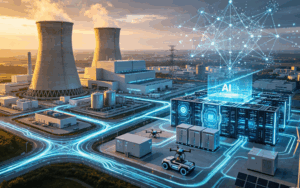
Copper has long been known for its ability to closely track changes in the global industrial economy, earning it the nickname “Dr. Copper.” In the eyes of many economists, it is considered a barometer of the global economy. However, its recent record-breaking rally increasingly resembles that of a hot tech stock closely linked to AI computing infrastructure. Investors are making bold bets that the unprecedented global frenzy of AI infrastructure construction, along with the surge in electricity consumption driven by AI training and inference, will trigger a sharp increase in copper demand. It can be said that the fate of this industrial metal is now tightly bound to the AI boom.
The supercycle for copper has likely already begun, but it is not the old-style “real estate boom-driven cycle.” Instead, it is a new type of supercycle shaped by the expansion of AI computing infrastructure demand, accelerated grid construction, global energy transition, hard asset inflation, and supply constraints from mines. In the AI computing chain, AI GPUs and AI ASICs are the core of computing power, while electricity is a prerequisite for data center operation. Copper serves as the foundational conductor for building both the power and computing systems. Without sufficient copper, it would be impossible to produce components such as high-speed copper cables and copper foils inside cloud server racks, nor to build AI data center infrastructure including power transmission, transformation, distribution, and liquid cooling systems.
Copper is transforming from the traditional “global industrial barometer” into a “hard asset of AI infrastructure.” The near-synchronous price movements between copper and core AI computing stocks such as Nvidia (NVDA), ASML (ASML), and Broadcom (AVGO) indicate that global capital has already incorporated copper into the extended trading scope of the AI computing chain.
However, AI is not the only force driving up LME copper prices. Investors have also been pouring into hard assets like copper as an important hedge against inflation, while chronic underinvestment in new mines has left the market exposed to the risk of supply shortages. Matt Miskin, co-chief investment strategist at Manulife John Hancock Investments, said: “Commodities have gone from a neglected asset class to an increasingly attractive one for multi-asset investors. For copper, it’s really a three-legged stool: AI demand, inflation hedging, and a hot macroeconomic environment.”
Analysts’ views on the impact of the AI wave on copper demand vary widely, with projections ranging from approximately 125,000 tons per year over the past three years to an estimated 1.1 million tons of data center demand by 2025. Mercuria, a major commodity trading house, expects demand growth of about 350,000 tons this year. Nicholas Snowdon, its head of metals research, stated that the growth of the AI computing infrastructure sector will resemble the golden development period of China’s electric vehicle and renewable energy industries, which have become major sources of copper demand in less than a decade.