
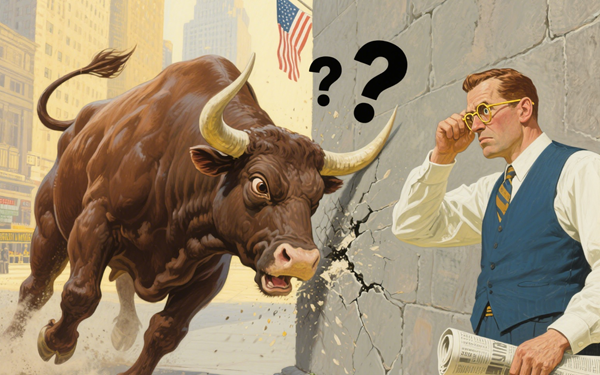
U.S. Treasury yields have jumped sharply across all maturities, with multiple key benchmarks hitting multi-year highs. As the world’s premier safe-haven assets, U.S. Treasuries reflect dramatic shifts in market sentiment and flash clear warning signs for investors. Fueled by resurgent inflation and rising bets on Federal Reserve rate hikes, a weakening bond market has sparked a pivotal question on Wall Street: will rising interest rates bring an end to the ongoing U.S. stock bull run?
Issued by the U.S. government, Treasuries are among the globe’s safest investments. Their yields move in lockstep with market views on inflation, economic growth and Fed policy, making the bond market a reliable gauge of investor sentiment and an early warning indicator for risks ranging from fiscal stress to recession.
The latest yield rally is driven by a notable pickup in U.S. inflation. Surging energy prices pushed April’s inflation rate to its fastest annual pace in nearly three years, completely upending market expectations for Fed policy formed at the start of the year. Per CME FedWatch, the market sees virtually no chance of rate cuts in 2026, while the probability of a rate increase this year keeps climbing.
Investors have dumped Treasuries over recent weeks, sending yields breaking through key resistance levels. The 30-year Treasury yield peaked at 5.19%, the highest since July 2007, while the 10-year yield rose to 4.69%, a 2025 January high. The bond sell-off has since moderated, pulling the 10-year yield down to 4.60% and easing near-term market jitters. Even so, inflationary pressures persist, and analysts project further inflation gains in the second quarter.
Yield movements carry far-reaching impacts across the real economy and equities markets. Higher bond returns have reshuffled asset allocations: unlike the era of ultra-low rates when stocks dominated investor portfolios, high-yield fixed income has now emerged as a compelling alternative, weighing heavily on richly valued U.S. stock sectors. Meanwhile, broad higher borrowing costs are also crimping corporate operations and expansion plans.
History suggests Fed tightening cycles have long been headwinds for U.S. stocks. Since 1999, the Fed has launched four rate-hike cycles, and the S&P 500 has fallen in the three months following each cycle’s start. Declines have ranged from 1% to 17%, with an average pullback of 7%. Despite simmering geopolitical tensions in the Middle East, the S&P 500 has rallied 9% year-to-date, sustaining solid bull momentum. Still, red flags from the bond market have stoked concerns that history may repeat, as growing rate-hike expectations pile pressure on equities.
Wall Street firms remain divided over the market outlook. Yardeni Research argues the bond sell-off stems primarily from short-term inflation fears rather than stagflation — a toxic mix of stagnant growth and high inflation. The firm maintains the U.S. economy and corporate earnings stay resilient, and near-term bond volatility will not derail the stock bull market. It even views current conditions as a good entry point for both stocks and bonds, while warning investors to stay alert if the 10-year yield moves materially above 5.00%.
DeVere Group holds a more cautious view. The investment advisory firm notes higher yields have created viable alternatives to equities, and resulting capital rotation will inevitably pressure high-valuation stock segments, a risk that cannot be overlooked.
In short, spiking energy prices have stoked inflation, which has flipped market rate expectations and pushed Treasury yields broadly higher. Fed policy odds have shifted decisively from cuts to hikes. While optimists bet on solid economic fundamentals to support the bull market, historical trends and rising rates have spread caution across the market. For now, the fate of the U.S. stock rally hangs in the balance. Inflation trends, Treasury yield movements and the Fed’s policy choices will dictate the next direction of financial markets.