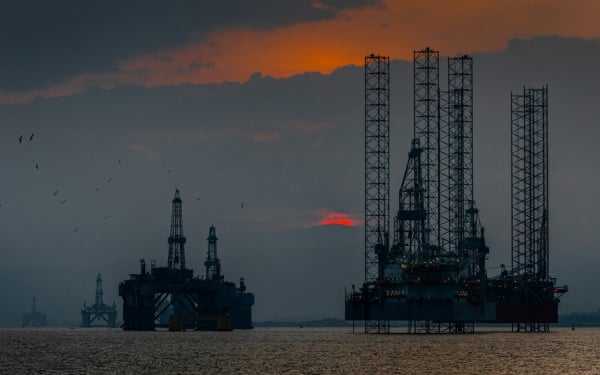
Rising geopolitical tensions along the Strait of Hormuz have stoked widespread concerns over global oil supply security, putting the operational resilience of international oil majors under intense scrutiny. To hedge against risks concentrated in the Middle East, ExxonMobil (XOM) and Chevron (CVX) have found a reliable profit driver in Guyana’s offshore oil assets, which have emerged as a core pillar sustaining their earnings growth.
ExxonMobil reported yesterday that its Guyana operations generated $4.7 billion in profits last year. The booming offshore oil sector in the South American nation has effectively offset headwinds stemming from Middle Eastern geopolitical turmoil. Meanwhile, Chevron secured $2.89 billion in earnings from Guyana in 2025 following its acquisition of Hess. The strong financial results from both firms reflect a broader industry trend: oil companies and investors are actively diversifying energy holdings to avoid overreliance on a single producing region.
At the heart of their Guyana strategy lies the massive Stabroek Block, spanning 6.6 million acres of deepwater territory. ExxonMobil holds a 45% working interest in the block, while Chevron controls a 30% stake via Hess. China National Offshore Oil Corporation (CNOOC) owns the remaining 25%. Since ExxonMobil made the initial discovery in 2015, the consortium has uncovered more than 11 billion barrels of recoverable crude, ranking this field as the world’s largest oil find over the past decade.
Cost competitiveness is the block’s greatest strength. Several developments here carry a breakeven price as low as $25 per barrel, well below the global average and just half the breakeven level of many onshore U.S. shale projects. In 2024, ExxonMobil Guyana posted an impressive EBITDA margin of 58%, highlighting its exceptional profitability.
Chevron sealed its $53 billion takeover of Hess in July 2025, a strategic move primarily aimed at gaining a firm foothold in Guyana and fueling long-term corporate expansion. The investment has quickly delivered tangible results. In November 2025, the Stabroek Block hit a production milestone of 900,000 barrels of oil per day, an extraordinary achievement for a deepwater project completed merely ten years after the first discovery. The launch of the fourth floating production, storage and offloading vessel, ONE GUYANA, in mid-2025 also pushed Chevron’s overall output to a record high.
Both oil giants continue to ramp up investment in the region. ExxonMobil plans to develop seven major projects across the Stabroek Block with total investment exceeding $60 billion. The Uaru and Whiptail developments are set to come online in 2026 and 2027 respectively, each delivering roughly 250,000 barrels per day. The $6.8 billion Hammerhead project is scheduled to start production in 2029. The eighth development, Longtail, is still pending regulatory approval. Once greenlit, the block’s total production capacity will reach 1.7 million barrels per day, surpassing the current output of OPEC members Libya and Nigeria. Overall production is projected to top 1.2 million barrels per day in 2027 and climb to 1.7 million barrels per day by 2030.
Solid earnings and steady production growth have further strengthened the two companies’ dividend credentials. ExxonMobil has raised its annual dividend for 43 consecutive years and unveiled a $20 billion share repurchase plan for this year. Chevron has lifted dividend payouts for 39 straight years, with its current dividend yield standing at 3.81%. Both names are top picks for income-focused investors.
Market analysts note that the Stabroek Block features a long production life and low operating costs, enabling stable profits even amid volatile crude prices. Backed by assets including Guyana’s oilfield, the Permian Basin, and LNG projects in Papua New Guinea and Mozambique, ExxonMobil expects its earnings and cash flow to surge by 2030 compared with 2024 levels, without additional capital expenditure. Against a backdrop of lingering geopolitical risks and fluctuating oil prices, ExxonMobil and Chevron stand out with diversified energy portfolios. Powered by Guyana’s high-potential oilfield, their long-term investment appeal remains compelling.