
Americore Resources (TSXV: AMCO)
Drilling Value in the Silver State
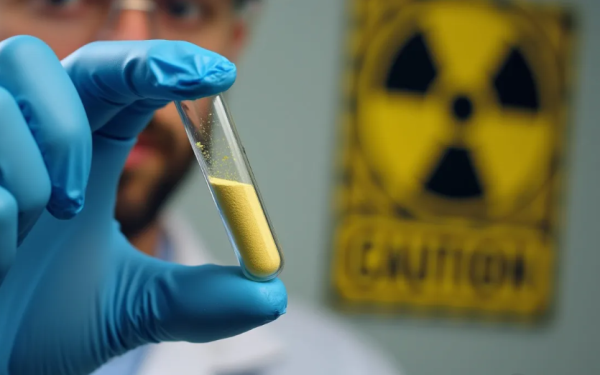
The world’s top uranium producer is standing firm on its years-long “value over volume” play, even as AI-driven power demand and a global reactor construction boom underpin long-term growth for the nuclear fuel sector.
Kazakhstan-based Kazatomprom has no intention of flooding the market with cheap uranium, CEO Meirzhan Yussupov said, noting the approach delivers lasting value for stakeholders, future generations and the country. The stance aligns with broader industry consensus that stable long-term pricing matters more than short-term volume gains in an upcycle.
Yussupov sees solid fundamentals backing the nuclear renaissance. As renewable capacity expands and AI electricity consumption surges, nuclear power is increasingly critical to grid reliability. Heightened energy security concerns have also pushed utilities to prioritize supply stability, with China, India and Middle Eastern nations rolling out ambitious buildout plans. China alone targets more than 100 reactors by 2030 and up to 200 by 2040, which would make it the world’s largest nuclear market.
Backed by Kazakhstan’s dominant resource base, a diversified client roster and its reputation as a reliable supplier, Kazatomprom is well positioned to capture the upside.
Beyond cementing its upstream mining leadership, Kazatomprom is pushing into downstream segments of the nuclear fuel cycle. Its long-term goal is a full domestic fuel cycle ecosystem covering conversion and enrichment, though significant geopolitical and technology-transfer barriers remain. Conversion projects are drawing more attention as market conditions improve and margins widen, with all investment decisions tied to commercial returns and shareholder value.
On logistics, the company has scaled up use of the Trans-Caspian Middle Corridor for Western shipments. In recent years, up to 65% of its uranium bound for Western markets moved via the route, providing a Russia-free alternative while preserving delivery flexibility for clients.
Yussupov added that Kazatomprom’s seven-fold share price gain since its listing showcases Kazakhstan’s investment appeal, supported by the country’s stable regulatory framework, non-proliferation compliance and partnership with the International Atomic Energy Agency.
The sector’s turnaround comes nearly 40 years after the 1986 Chernobyl disaster derailed global nuclear development, with the 2011 Fukushima accident delivering a further setback. Decarbonization goals, energy security priorities and surging power demand have reversed the trend, accelerated by conflict in the Middle East.
“I am 100% sure nuclear is coming back,” International Energy Agency executive director Fatih Birol told the Associated Press, forecasting strong recovery across the Americas, Europe and Asia. IAEA director general Rafael Grossi attributed the momentum to growing recognition that reliable low-carbon power is essential to meeting rising global energy needs.
More than 400 reactors operate in 31 countries worldwide, with around 70 under construction. Nuclear power generates roughly 10% of global electricity, accounting for about a quarter of all low-carbon supply. Steady technological advances have also improved reactor safety and reduced construction and operating costs.
National policy trajectories remain sharply split. The US — the world’s largest nuclear producer with 94 reactors — aims to quadruple capacity by 2050. China leads global new builds with nearly 40 units under construction, on track to overtake the US. European Commission chief Ursula von der Leyen has called Europe’s nuclear pullback a “strategic mistake” and is backing initiatives including small modular reactors expected to enter service in the early 2030s.
France, Sweden and Finland remain steadfast nuclear proponents, and Belgium has repealed its phase-out law. Germany shut its last reactors in 2023 with no reversal in sight, while Spain plans to phase out its fleet between 2027 and 2035. Russia leads global nuclear exports with 20 reactors under construction worldwide, and Japan has restarted 15 reactors idled after Fukushima.
For Kazatomprom, the uneven global policy landscape only reinforces the case for its disciplined, value-focused growth model, calibrated to capture long-term upside rather than chase near-term volume gains.