

GR Silver Mining Ltd. (TSXV: GRSL, OTCQB: GRSLF)
Advancing a World-class Silver Resource in Mexico amongst a $80+ / oz Ag Market
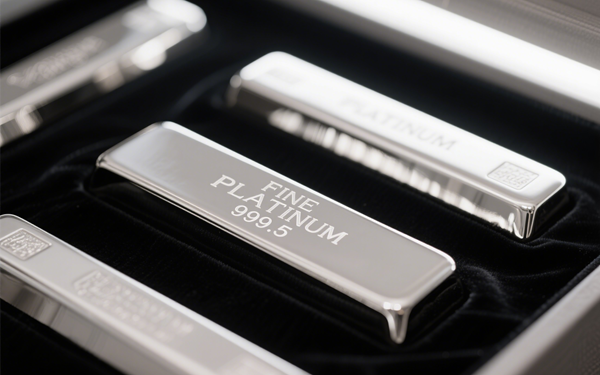
Platinum group metals have recently become the first to fall in the precious metals complex. Following last Friday’s sell-off, platinum and palladium prices continued to decline this week, both hitting their lowest levels of the year. However, amid widespread market pessimism, Bank of America remains bullish on its year-end outlook, offering clear logical support.
As of before Tuesday’s close, spot platinum was trading at $1,711 per ounce, down more than 2% on the day; palladium was last at $1,203 per ounce, up 0.5% on the day. Over the four trading days since last Friday, platinum and palladium have fallen more than 9% and 6%, respectively. In tandem with gold’s recent breakdown, the broader precious metals complex is under pressure, with PGMs bearing the brunt.
Bank of America commodity analysts acknowledged in their latest report that the rally in PGM prices has lost momentum since late January, largely tracking moves in gold. Meanwhile, ongoing macro headwinds from the conflict in the Middle East add downside risk to industrial metals demand. However, the bank stated clearly: “We remain bullish on gold into Q4 2026, which we expect will draw investors back into the PGM market and add upward pressure to prices.”
Based on this judgment, Bank of America expects platinum prices to average around $3,000 per ounce from Q4 2026 through the first half of 2027, while palladium prices are forecast to average around $2,200 per ounce in the last three months of the year.
Why the recent sharp decline? Tariff “false alarm”
Looking back at 2025, PGMs saw significant gains due to global trade wars and threats of tariffs on precious metals, which created severe liquidity issues in the physical market. However, Bank of America noted that as tariff threats never materialized, previously accumulated inventories began to flow out in reverse. Platinum outflows from NYMEX warehouses exceeded 200,000 ounces, equivalent to half of the inflows in the second half of 2025. Palladium also experienced outflows in late January, but those have now more than reversed as the U.S. Commerce Department imposed a final anti-dumping duty of 133% and a countervailing duty of 109% on Russian palladium ounces.
Demand divergence: Winners and losers in the EV era
The automotive sector is the most important downstream market for PGMs. Bank of America observed that EV adoption in China has significantly outpaced traditional internal combustion engine vehicles. In 2026, EVs are expected to account for 40% of China’s light vehicle production, surpassing ICE vehicles (36%) for the first time, while hybrids reach 24%. China’s ICE vehicle production has declined from 21 million units in 2020 to about 14 million units in 2025. In contrast, EV adoption in Europe and the U.S. remains slower, with the U.S. even stepping back from earlier electrification ambitions.
This divergence has led to a small expected deficit for platinum this year, while palladium faces a small surplus. Additionally, platinum jewelry demand is weakening, particularly in China, where surplus inventories accumulated during the mid-2025 fabrication surge continue to weigh on the market. Retailers remain well-stocked and consumer demand is subdued, pointing to a sharp contraction in Chinese fabrication volumes this year.
Supply-side concerns: Rising cost pressure in South Africa
Despite demand-side uncertainties, Bank of America sees risks on the supply side as well. The conflict in the Middle East has pushed up global oil prices, and South Africa, as a net oil importer with limited domestic crude production and declining refining capacity, is increasingly reliant on imported fuel. The mining sector’s dependence on diesel is particularly acute—for haulage, mechanized operations, and backup power generation. Diesel prices have risen sharply since the onset of the war, and on top of that, South Africa’s state power utility Eskom implemented an 8.76% increase in electricity tariffs from April 2026. These factors together are pushing up mining input costs. In Q1 of this year, South African miner Sibanye-Stillwater reported a 13% year-on-year increase in unit costs, reflecting ongoing inflationary pressures including higher labor and energy costs.
Conclusion
In summary, Bank of America’s view is that short-term negatives (unrealized tariff expectations, EV impact) have been priced in, while the medium-term bullish logic (gold-driven sentiment, supply cost support) remains intact. For investors, whether the current deep pullback in PGMs represents a trend reversal or a “golden pit” for the year-end rally may ultimately depend on whether gold reasserts its uptrend in the fourth quarter as expected.