
District Metals Corp. (TSXV:V.DMX. Nasdaq: DMXSE SDB)
Advancing the Largest Undeveloped Uranium Deposit in the World
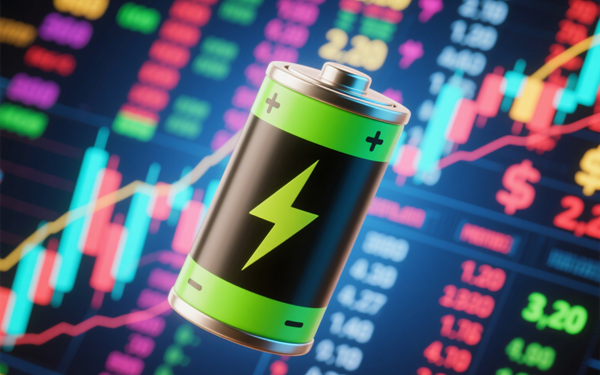
The darkest hour for the battery metals market appears to have passed. Prices of lithium, cobalt, and nickel have all rebounded significantly from their 2024–2025 troughs.
Yet this rally is more the result of supply-side “forced braking” than a signal of broad-based demand recovery. The Democratic Republic of Congo, the world’s largest cobalt producer, has restricted exports since February last year, while Indonesia has used quota systems to cool its nickel mining sector—supply restraint is undoubtedly the dominant force behind this recovery. However, as the marginal effect of supply constraints diminishes, whether demand can take over the baton has become the market’s core concern.
At the aggregate level, battery demand has not stopped growing. According to the International Energy Agency, global lithium-ion battery deployment in 2025 reached six times its 2020 level, with the electric vehicle sector accounting for 70% of that total. But it is precisely this core driver that is now showing signs of fatigue. Data from consultancy Benchmark Mineral Intelligence show that global EV sales growth slowed sharply to just 0.9% year-on-year in the first five months of this year, compared with 20% growth for the full year of 2025.
Regional divergence is particularly striking: North American sales plunged 25% year-on-year following the removal of U.S. tax credits last September, while China, the world’s largest EV market, contracted 15% over the same period. Only Europe recorded 26% growth, while the rest of the world posted 89% growth, driven by accelerating Chinese EV exports. The impact of slowing sales on lithium demand has been partially cushioned by the trend toward larger vehicles, which require larger battery packs—to some extent offsetting the pressure from weaker unit sales.
As EV demand loses momentum, grid-scale energy storage is emerging as a second pillar of lithium demand. The IEA notes that installations in this sector have grown more than twenty-fold over the past five years, accounting for 15% of total battery demand in 2025. China is currently in the midst of a three-year plan to more than double its new energy storage capacity to 180 gigawatts by 2027, in support of a five-year target to generate 50% of the nation’s power from renewable sources by 2030.
However, the “lifeline” effect of the storage market faces structural limitations: both stationary storage batteries and half of China’s automotive battery market adopt the lithium-iron-phosphate chemistry, which contains neither cobalt nor nickel. This means that the storage boom provides almost no demand support for these two metals. Data from consultancy Adamas Intelligence show that average cobalt and nickel usage per passenger EV battery in April remained unchanged year-on-year, confirming the marginalization risk facing these metals amid ongoing chemical-system evolution.
Beyond the divergence in demand structure, price itself is becoming a new “counterforce.” Lithium carbonate prices have nearly tripled since the middle of last year. Analysts at consultancy Project Blue estimate that current price levels have already reached the break-even point for some grid storage projects, warning that “the risk of demand destruction grows if prices keep rising.” This suggests that the current recovery is more likely to face a ceiling than to replicate the explosive surges of the past.
In sum, the battery metals market has entered a new phase: supply-side policy interventions have established a price floor, but slowing demand growth and evolving battery chemistries jointly cap the upside. The moves of policymakers in the DRC, Indonesia, and China’s Jiangxi province will continue to influence market sentiment, but the long-term equilibrium ultimately hinges on the trajectory of EV sales growth, the pace of storage commercialization, and the substitution speed of new chemistries for traditional metals. The uncertainty surrounding these three variables ensures that the battery metals market will likely remain trapped in a “floor below, ceiling above” range-bound pattern for the foreseeable future.