Eli Lilly & Co. (LLY)’s reign atop the red-hot GLP-1 weight-loss drug market is getting fresh validation from surging U.S. consumer adoption, as new polling shows usage nearly tripling in two years. With the drugmaker’s market value now topping $1 trillion and its stock up more than 400% over half a decade, investors are weighing whether the historic run has further room to run.
A Gallup national health survey conducted in June 2026 found 11% of U.S. adults are currently taking GLP-1 medications for weight management, up sharply from 3% in 2024. Fifteen percent of respondents said they have used the drugs at some point, a 9-percentage-point increase over two years, while public awareness of GLP-1 obesity treatments has climbed to 90% from 80% in 2024.
The explosive uptake underscores the massive unmet demand for medical weight-loss solutions. Industry consensus projects the global obesity drug market will swell to nearly $100 billion by 2030, suggesting the category remains in the early stages of a long expansion cycle.
Lilly has cemented its position as the global GLP-1 leader, overtaking long-time rival Novo Nordisk to command 60% of the U.S. market and 53% of international sales as of the first quarter. Its star molecule tirzepatide — marketed as Mounjaro for type 2 diabetes and Zepbound for obesity — dethroned Merck & Co.’s Keytruda late last year to become the world’s best-selling drug.
In the first quarter of 2026, the two tirzepatide brands delivered combined revenue of $12.82 billion, making up 65% of Lilly’s total top line. Overall quarterly sales reached $19.8 billion, a 56% year-over-year surge that blew past Wall Street’s consensus estimate of $17.7 billion. Citing stronger-than-forecast tirzepatide momentum, management raised its full-year 2026 revenue guidance by $2 billion to a band of $82.2 billion to $85 billion, and lifted its earnings-per-share outlook to $35.50–$37.00.
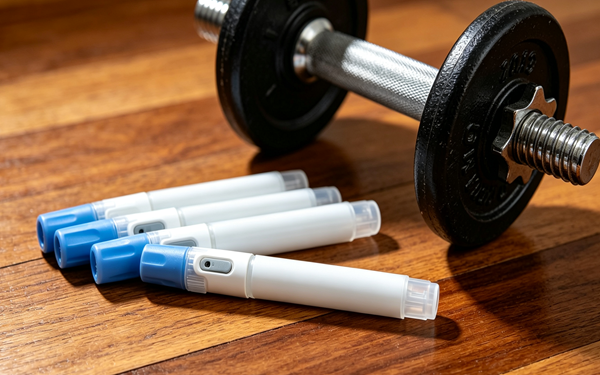
New growth catalysts are already lining up. In early April, Lilly rolled out Foundayo, its oral GLP-1 weight-loss therapy, shortly after securing FDA approval. As the first oral small-molecule non-peptide GLP-1 drug for obesity with no food timing requirements, the pill is poised to win over patients who resist injectable treatments. The company reported more than 20,000 patients initiated therapy in the drug’s first week on pharmacy shelves.
Deeper in Lilly’s pipeline, triple-acting agonist retatrutide is in Phase 3 development. Targeting GLP-1, GIP and glucagon pathways, the candidate has demonstrated enhanced weight-loss efficacy in patients with severe obesity. Additional Phase 3 data is expected later this year, with the drug widely seen as Lilly’s next potential blockbuster.
The torrid growth has come with a premium valuation. Lilly shares are up roughly 14% year to date and 6% in the past month, pushing its market capitalization past the $1 trillion mark. At about $1,222 apiece, the stock trades at 43 times trailing 12-month earnings and 33 times forward earnings — well above the S&P 500’s 32 times trailing and 20 times forward multiples.
The steep valuation has split Wall Street. Skeptics argue the share price already reflects most of the GLP-1 growth narrative, leaving limited upside and vulnerability to pullbacks if future results fall short. Optimists counter that product iteration, geographic expansion and new indications will sustain above-market growth and gradually normalize valuation, noting the weight-loss drug boom is far from mature.
Competitive pressures are building, too. While Novo Nordisk remains the primary challenger, biotechs such as Viking Therapeutics are advancing late-stage weight-loss candidates, with plans to start a Phase 3 oral trial before the end of 2026. Even so, most analysts believe the fast-expanding market can support multiple successful players, and Lilly’s head start, clinical data superiority and diversified product lineup make its near-term lead hard to overturn.
For now, the long-term growth case for GLP-1 therapies remains broadly undisputed. Whether Lilly’s stock can extend its multiyear climb will ultimately hinge on the speed of Foundayo’s commercial ramp, clinical progress in its pipeline, and the company’s ability to deliver sustained earnings growth that justifies its lofty price tag.