
Pinnacle Silver & Gold Corp (TSXV: PINN)
Building a New Americas-Focused Silver and Gold Company
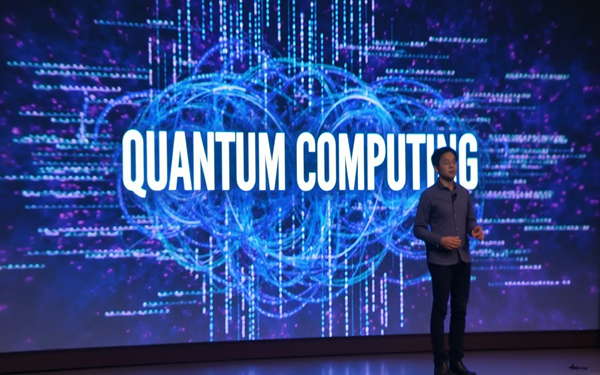
Quantum computing is undoubtedly one of the hottest sectors in the market right now, and almost every name in the space has been riding the wave higher. However, not every company has the underlying business fundamentals to support its share price. Among them, Rigetti Computing (RGTI) stands out for the glaring disconnect between its valuation and reality amid surging enthusiasm, with the risk of a sharp second-half pullback looming large.
Shrinking Revenue, Sky-High Valuation
The core problem with Rigetti lies in the severe disconnect between its fundamentals and market capitalization. For the full year 2025, the company generated only about $7 million in revenue, which represented a 34% year-over-year decline. At the same time, its market cap sits in the billions, translating to a price-to-sales (P/S) ratio in the hundreds. By comparison, most established technology companies trade at single-digit or low-teens P/S multiples. In other words, investors are paying an extremely steep premium for a future that has yet to materialize.
Continuous Dilution: A Sword Hanging Over the Stock
An even greater near-term risk is equity dilution. Rigetti operates an “at-the-market” (ATM) equity program, which allows it to sell new shares directly into the open market whenever the stock price rises. The company has already raised approximately $100 million** through this mechanism. Additionally, in 2026, Rigetti accepted about **$100 million in federal quantum funding — but the U.S. government received an equity stake in return. While both moves strengthen the balance sheet, they also significantly expand the total share count — and share dilution tends to weigh on the stock price over the medium to long term.
Why the Bull Case Could Fall Apart
To be fair, Rigetti is not without merit. The company is developing genuine superconducting quantum chips, with a credible roadmap for its modular chip architecture, and the federal funding serves as a form of validation that most start-ups never receive. With ample cash on hand, the company is not at immediate risk of running out of money. If a technical milestone is achieved or quantum enthusiasm flares up again, this highly volatile stock could still spike sharply — as it has done before.
But the issue is not whether quantum computing matters. The problem is that the current stock price has already priced in years of future success — while the actual business (just $7 million in annual revenue, and shrinking) is far from catching up. At the same time, the company keeps issuing new shares. This triple whammy — lofty valuation, declining revenue, and persistent dilution — is precisely the kind of combination that can crack when market enthusiasm cools.
Industry Comparison and Investment Takeaways
Peer companies in the same space, such as IonQ and D-Wave Quantum, face similar valuation risks, though IonQ at least maintains growing revenue, offering slightly stronger fundamental support.
For investors still tempted by Rigetti at current levels, position sizing should be kept modest, and one should be mentally prepared for the possibility of a sharp pullback in the second half of the year. The long-term potential of quantum computing is beyond doubt — but even on the right track, entering at an excessively high price does not guarantee satisfactory returns. At current valuation levels, Rigetti has very little room for error — and if market sentiment shifts, the cost of disappointment could be significant.