

1911 Gold Corporation (TSXV: AUMB; OTCQX: AUMBF)
1911 Gold is Manitoba’s Gold Standard - Ready, Permitted and High-Grade 1911 Gold is an Emerging Gold Producer, with Significant Cash Flow Generation and District-Scale Growth Potential
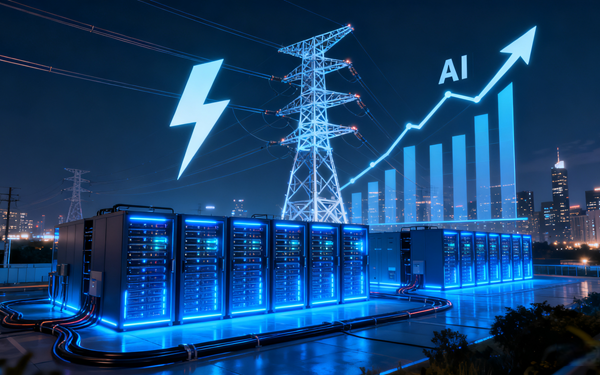
While the global artificial intelligence race remains fixated on the iterative advancement of computing chips and the expansion of model parameters, a more fundamental constraint is surfacing—electricity. In after-hours trading on Tuesday Eastern Time, solid oxide fuel cell manufacturer Bloom Energy (BE) announced a new financing partnership with global infrastructure investment giant Brookfield Asset Management (BAM) for its AI power projects, with the scale dramatically increased from the $50 billion initially disclosed in October 2025 to $250 billion, representing a fivefold increase. Lifted by this news, Bloom Energy’s stock price rallied sharply in after-hours trading.
Under the latest agreement between the two parties, Brookfield will provide up to $250 billion in financing support for Bloom Energy’s fuel cell power projects through its dedicated AI infrastructure fund. The leap from $50 billion to $250 billion occurred within just nine months, clearly reflecting a dramatic pivot in AI infrastructure investment logic from “computing first” to “power first.”
In a joint statement, the two companies said that this expansion “reflects robust and sustained demand from hyperscale data center operators and artificial intelligence infrastructure developers for fast, reliable, and community-friendly power.” The two sides are jointly advancing a new “AI factory” model designed to integrate power supply, computing capacity, data center infrastructure, and capital from the very beginning of project planning. Brookfield confirmed that this partnership falls under its dedicated AI infrastructure fund launched in November 2025, which has a target size of $100 billion. The $250 billion financing commitment accounts for one-quarter of that fund, underscoring the central role of power supply in AI infrastructure investment.
Bloom Energy’s core technology is solid oxide fuel cells, which convert natural gas or hydrogen into electricity. Compared with conventional grid power, this technology offers advantages including high reliability, low carbon emissions, and flexible deployment. These characteristics are almost custom-made for AI data centers. On the one hand, interruptions to AI training carry extremely high costs, and fuel cells can serve as uninterruptible power supplies or primary power sources, significantly reducing the risk of downtime. On the other hand, compared with building new power plants and undertaking lengthy grid upgrades, fuel cell systems can be installed and grid-connected within months, with lower noise and emissions, making them easier to secure local approvals and effectively bypass grid bottlenecks to enable on-site power generation. These unique strengths have made Bloom Energy a “power merchant” in the eyes of AI infrastructure developers. The company has already successfully deployed its technology in data center projects through partnerships with American Electric Power, Equinix, and Oracle.
For investors, the AI investment theme is evolving from the traditional “chip-server-data center” chain toward infrastructure segments such as “power-cooling-networking.” The expanded cooperation between Bloom Energy and Brookfield may well be only the beginning of this historical trend.