

Prismo Metals Inc. (CSE:PRIZ)
A leadership team with a proven ability to explore, operate and develop precious metal discoveries.
The Yangshan copper premium — a closely watched gauge of import demand in the world’s top consumer — surged to $100 a metric ton on Friday, its highest level in more than a year, signaling a sharp tightening in China’s physical copper market. That compares with just $20 a ton at the end of January.
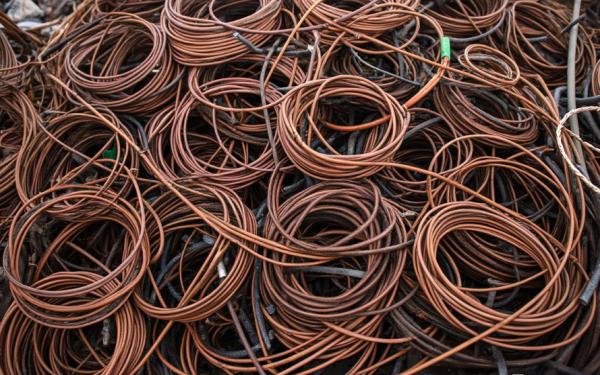
Behind the dramatic run-up is an acute shortage of copper scrap. Beijing’s months-long crackdown on the so-called invoice economy has severely disrupted scrap processing and circulation. With scrap flows dwindling, downstream buyers have been forced to pivot to refined metal, amplifying import demand. “We attribute the recent tightening mostly to substitution from scrap into cathode, rather than to end demand,” Goldman Sachs analysts wrote in a note on Monday, adding that stricter VAT enforcement on scrap has constrained domestic scrap circulation.
The supply squeeze has been compounded by maintenance outages at several Chinese smelters, which have curtailed refined production and drained an already stretched market.
Inventory figures reinforce the tightness. Copper stockpiles in China have fallen to the bottom of their seasonal range. Shanghai Futures Exchange inventories dropped 20% last week to 79,909 tons, bringing the year-to-date decline to 45%. Meanwhile, London Metal Exchange warehouse stocks slipped on Friday to their lowest since March, as traders continue to pull metal out of the LME system to ship to China. In stark contrast, Comex copper inventories have climbed to a record 630,293 tons, highlighting a deep regional divergence.
Against this backdrop, LME copper traded near $13,600 a ton on Monday, leaving the price up roughly 9% since the start of the year. Expectations of potential US tariffs have also offered some support.
Tight inventories, robust import demand and falling exchange stocks are providing near-term backing for copper fundamentals. However, ING analysts cautioned that worries over global growth and uncertainty surrounding the Federal Reserve’s policy outlook could limit further upside.