
GR Silver Mining Ltd. (TSXV: GRSL, OTCQB: GRSLF)
Advancing a World-class Silver Resource in Mexico amongst a $80+ / oz Ag Market
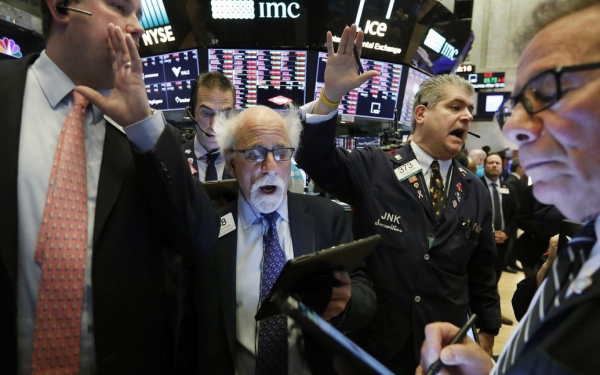
U.S. equity markets presented a rare sight on Monday: as nearly all major chip stocks tumbled in unison, Berkshire Hathaway‘s Class B shares rose approximately 1.3% against the trend, touching $502 during the session. On the day, Nvidia fell about 2%, marking its seventh consecutive session of decline; AMD dropped about 3%, Broadcom about 2%, Intel about 3%, and Micron Technology about 5%. The S&P 500 edged down just 0.28%, yet the index’s largest conglomerate managed to gain more than 1%.
Is this a one-day anomaly, or does it reflect a logical rotation of capital? The evidence points toward the latter.
Berkshire’s appeal lies precisely in its “AI independence.” As of the end of June, the conglomerate—once helmed by Warren Buffett—held approximately $35 billion in cash and about $325 billion in short-term U.S. Treasury bills, totaling roughly $360 billion in liquidity reserves. This vast sum is not bet on any particular theme; it earns interest while waiting for opportunities—and no sell-off in AI infrastructure touches a single dollar of it.
Berkshire’s operating businesses are equally insulated from the AI build-out. Its earnings streams span auto insurance and reinsurance, rail transportation, electric utilities, and dozens of manufacturing and retail enterprises. In the second quarter, the company’s operating earnings rose 16% year over year to approximately $13 billion. Within that, the manufacturing, service, and retailing group grew 24%, Berkshire Hathaway Energy’s profits climbed 27%, and the BNSF railroad contributed about $1.6 billion in earnings, up 6% year over year. Insurance was the soft spot, with underwriting earnings falling 13% year over year and insurance investment income slipping 9% to about $3.1 billion. But the key takeaway is this: none of these results depends on the price of a graphics processing unit.
Even at the stock portfolio level, Berkshire has deliberately kept its distance from the chip theme. Its top holdings are Apple, American Express, Alphabet, Coca-Cola, and Bank of America—a lineup of consumer and financial giants, with Alphabet as the sole exception. At the end of the second quarter, Berkshire’s stake in Alphabet was worth approximately $37 billion, representing its only significant position adjacent to AI. But the overall portfolio holds no chipmakers at all.
Of course, Berkshire is not immune to market declines. In a genuine economic downturn, its railroad hauls less freight and its equity holdings fall alongside the broader market. But in a narrower sense, Berkshire’s earnings power does not depend on the continuation of the AI spending boom—and Monday’s price action suggests investors are willing to pay a premium for that independence.
Market anxiety had been building for a week. The iShares Semiconductor ETF fell 5.5% last week before Monday’s drop, Nvidia is set to report earnings after Wednesday’s close, and gold prices touched their highest level since May—capital is rotating into defensive positions.
Meanwhile, Berkshire has been supporting its own stock with tangible action. The company repurchased about $4.5 billion of its shares in the second quarter, a sharp step-up from the $235 million it spent on buybacks in the first. During the quarter, Berkshire was also a net buyer of about $20 billion in stocks—evidence that the conglomerate still sees value in equities.
At around $502, Berkshire’s market capitalization stands at approximately $1.1 trillion, or about 21 times its annualized operating earnings. The reported price-to-earnings ratio is lower, at about 12 times, but that figure includes sizable investment gains that fluctuate from quarter to quarter. On the more stable operating earnings basis, Berkshire is arguably no longer the bargain it was a few years ago.
Still, the stock offers something scarce in today’s market. Its roughly $360 billion in cash and Treasury reserves becomes more valuable, not less, as other assets grow cheaper. On the first day in some time that investors seriously doubted the chip complex, Berkshire was what they bought—and that might not be a coincidence.