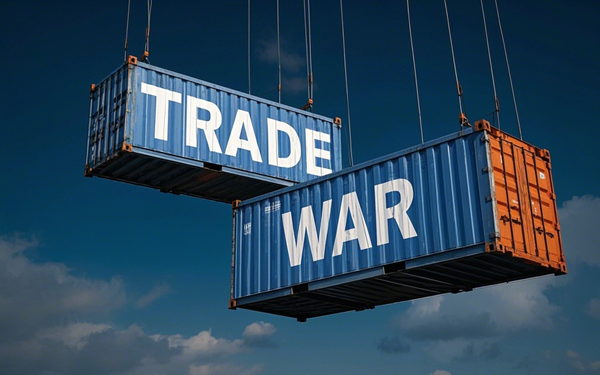
Canada’s debate over using natural resources as leverage in its trade war with the U.S. has split the country along regional lines, with Ontario pushing for aggressive action on potash while Saskatchewan warns of economic self-harm. The dispute has also drawn a stark warning from the head of the Trans Mountain pipeline, who compared any oil cutoff to “mutually assured destruction.”
The divisions underscore a structural dilemma: provinces hit hardest by U.S. tariffs want forceful retaliation, while western resource economies fear losing long-term customers and revenue.
Canada is the world’s dominant potash supplier, and the U.S. relies on its northern neighbor for roughly 85% of imports of the fertilizer ingredient. Ontario Premier Doug Ford said cutting off potash would “kill the American agricultural sector overnight,” a stance echoed by federal NDP Leader Avi Lewis, who called for export taxes on oil, gas, thermal coal, potash and other minerals to “hit Trump where it hurts.” Green Party Leader Elizabeth May also backed withholding potash, describing it as striking a bully’s “soft, fleshy parts.”
Saskatchewan, however, supplies more than 86% of the potash Canada sends to the U.S., and Premier Scott Moe has flatly rejected the idea. He warned that export taxes or supply restrictions would deliver a “tremendous economic hit” to the province and the country, triggering job losses and price increases. Moe said the U.S. would simply switch to other global suppliers, costing Canada a long-term customer. He left the door open only to negotiating access to additional production capacity.
The split reflects the uneven toll of U.S. tariffs. Jim Farney, director at Queen’s University’s School of Policy Studies, said Ontario and British Columbia are absorbing the heaviest blows, while Alberta and Saskatchewan are “hardly touched.” Heather Exner-Pirot of the Macdonald-Laurier Institute said the tariff impact is “much more pungent” in Ontario’s auto and steel sectors, adding that western provinces “don’t want it to have the same impact.”
Even the tactical value of potash is in question. Exner-Pirot noted the U.S. market is saturated, with limited room for demand growth. Producers such as Nutrien have already stockpiled supplies inside the U.S. in anticipation of tariffs or export taxes, meaning any new levy would not apply to inventory already south of the border.
Trans Mountain Corp. Chief Executive Officer Mark Maki delivered an unusually blunt warning against using oil as a retaliatory weapon. “Interdependencies between both countries are high,” he said in an interview after the Crown corporation reported second-quarter results. “I hope people put down the shovels here pretty quick. We’re hitting each other and we’ve got to stop that.”
Maki said disrupting southbound crude exports would amount to a version of mutually assured destruction. The 890,000 barrel-per-day Trans Mountain pipeline is the only meaningful route for Canadian crude to reach non-U.S. markets, with almost two-thirds of volumes now moving by tanker to Asia. Washington state refineries receive about a third of their supply from Canada. Canadian energy regulators report the country exported 4.3 million barrels per day of crude in 2025, with 90% going to the United States.
“If this country were to tighten the taps to the U.S., where’s Canada going to put the barrels?” Maki asked.
Kent Fellows, an economics professor at the University of Calgary’s School of Public Policy, said energy restrictions should remain “very close to a last resort.” He outlined three retaliatory options: export restrictions or export taxes, which raise U.S. costs while hurting producer margins and Alberta royalty revenue; and production curtailment, where the province caps output to lift prices — potentially benefiting producers and government coffers while still raising U.S. costs. Even curtailment, Fellows warned, remains “a dangerous game” that could provoke a more than proportional U.S. response.
The potash and oil disputes reveal the fragility of the united front Canadian premiers and the prime minister have championed. Eastern manufacturing provinces are seeking high-impact retaliation, while western resource provinces resist bearing the cost. White House officials have repeatedly noted that the U.S. has not tariffed Canadian oil, energy, uranium or potash, and have signaled no immediate intention to change course.
For Canada, the resource card has become a political and economic minefield. Potash may not deliver the knockout blow its advocates promise, and oil is off the table for now. The real test is whether a country deeply dependent on U.S. markets can find leverage without first deepening its own fractures.