As the metals and mining industry heads to London for its annual jamboree it will arrive with a valuable commodity — an exciting growth story to sell to investors that has environmentally friendly credentials.
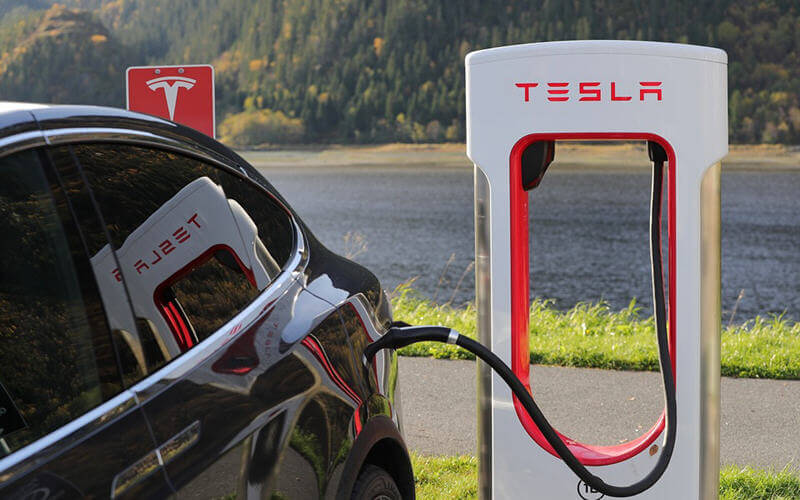
After years of relentless cost-cutting and balance sheet repair, the industry will be pushing its role in the green energy revolution, explaining that electric vehicles and battery storage technologies need the material it digs out of the ground.
“This year’s London Metal Exchange week will undoubtedly feel more upbeat than in recent years,” says Colin Hamilton of BMO Capital Markets, who expects EVs to be a central topic of discussion.
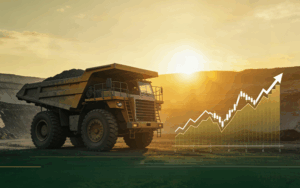
Aided by the acceleration in global economic growth and supply side reforms in China, the world’s biggest consumer of commodities, industrial metals have been one of the performing assets classes of 2017, rising by more than 20 per cent.
That has lifted the profits of major mining houses which, for the first time since the end of the so-called commodities super cycle, are starting to talk with confidence about their growth options and how they can tap into the green energy revolution.
“Last year and in 2015 there was no talk about long-term pricing because no one was building anything,” says George Cheveley, a fund manager at Investec. “But as the industry starts to think about growth and new capacity, discussions around incentive pricing will become more and more important. And the theme of electric vehicles plays into that.”
Nickel is likely to take centre stage at LME Week, analysts say. The metal is already emerging as one of the favoured ways to play the EV supply chain, as some of the largest battery makers shift towards models that use more nickel to increase the amount of power they can store, thereby boosting a vehicle’s range.
Analysts at consultancy Wood Mackenzie estimate that nickel demand in EV batteries will jump from about 40,000 tonnes in 2016 to 220,000 tonnes in 2025. To put that figure in perspective, the global nickel market is 2.1m tonnes in size.
“That’s what the world is focusing on,” said Geoffrey Sambrook, a former metals trader who now writes on the industry under the pen-name Lord Copper. “We all know copper will perform well with the increase in EVs but it’s the minor metals where the interest is.”
An LME working group with 70 carmakers, battery producers and miners involved in electric vehicles is due to meet in London this week to discuss new futures contracts for lithium and cobalt that would allow users to manage their exposure to fluctuating prices.
“Battery metals we see as transformational,” Matthew Chamberlain, who was appointed chief executive of the LME in April, says. “It’s nice for the metals community to have a really exciting growth story.” As well as EVs, Julian Kettle of Wood Mackenzie said delegates would be talking about the recovery in prices and whether it was sustainable, as well as the outlook for growth in China over the medium and long term.
Attendees will be hoping to hear about whether mining companies will hold the fort on the supply discipline they have advocated since a collapse in commodity prices in 2012. Nowhere is that more critical than in zinc, a metal used to galvanise steel. It is a market dependent on the largest producer Glencore, which shut down a third of its capacity in late 2015.
The key question is when Glencore will bring back its production, given that zinc prices have risen almost 90 per cent since its announcement. The miner-cum-trader is likely to implement a phased introduction of supply into the market, according to analysts, so as not to crash prices.
For aluminium the story has been China’s efforts this year to clean up the environment, which has cut supply of the lightweight metal. China has cracked down on illegal production and also issued an edict for cities in the north of the country to shut down over the winter months.
Declining production from China means that outside the country the market is set to be in its biggest deficit — almost 1.9m tonnes — according to Eoin Dinsmore, an analyst at CRU Group. “There is a question in the market over how much higher prices can go in 2018, but underneath there is a very firm basis for the rally,” Mr Dinsmore says.
Source: www.ft.com