Ten-year yields point to higher commodities: Shelley Goldberg

Ten-year yields point to higher commodities: Shelley Goldberg-彭博社:十年期美国国债收益率显示大宗商品价格将走高
Published on: Feb 11, 2018
Author: Editor

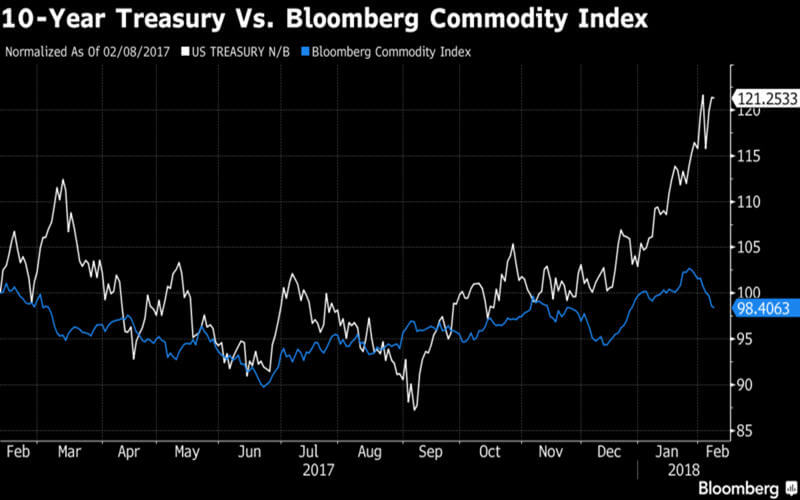
The 10-year Treasury yield is one of the best metrics for predicting the direction of commodity prices. Its increase in recent months indicates that commodities have more room on the upside. The correlation between commodity price and the 10-year has been strong over time, for a number of reasons.

  • Interest rates are one of three elements that help determine the intrinsic price of a commodity. The other two are storage costs and insurance, because there’s a “cost of carry” to both store and insure commodities. These three factors determine the price of a commodity at each point along its forward (physical) curve or futures (financial) curve. Prices then move based on fundamental factors (global supply and demand), macro drivers (including the strength of the dollar), and technical factors (charting price and volume), which all influence each price along the curve. The chart above tracks the 10-year and the Bloomberg Commodity Index.
  • So, why focus on the 10-year? It can take that long if not longer to develop a gold mine, construct an aluminum smelter or cultivate a timber plantation, particularly given the legislative and environmental roadblocks that can delay a project. That means it could be a decade before new supply comes onto the market to potentially pressure prices downward. For this reason, the 10-year is a more reliable indicator than shorter-term interest rates.
  • Treasury yields show how investors feel about the economy in the future, which influences spending habits today. Rising yields are generally a reflection of a stronger economy and heightened confidence. Manufacturers then build plants and grow inventories to respond to greater demand.

Why not just look at the U.S. federal funds rate or a basket of global money market rates such as the London interbank offered rate or the Euro interbank offered rate? As most global commodities are priced in dollars, it makes sense to focus on U.S. rates. But that decision has more to do with the relative value between today’s rates and long-term ones than with individual yields. The higher the yields on 10-year relative to short-term rates, the better the economic outlook. The rise of the 10-year at the present indicates expectations of a strong economy and a greater desire to spend today in order to avoid paying higher prices in the future, which, in turn, drives up the prices of raw materials.

The recent surge in volatility across all financial markets reflects a fear of an overheating of the U.S. economy, which would be a signal of inflation to come. So, keep an eye on the 10-year Treasury and consider increasing commodity investments should the rate continue to rise. The Federal Reserve is expected to raise interest rates approximately three or four times in 2018.

This column does not necessarily reflect the opinion of the editorial board or Bloomberg LP and its owners.

Source: Bloomberg
Mining