Global Battery Metals Primarily Sold to Three Asian Countries
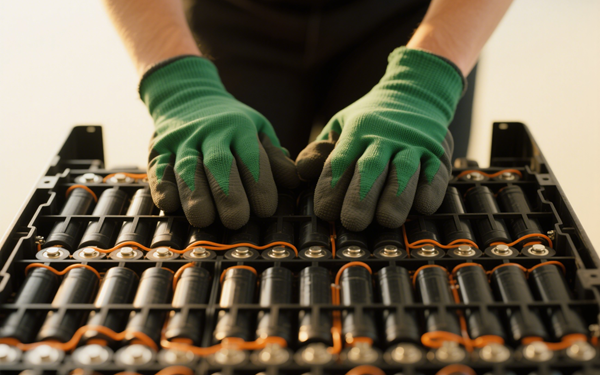
Recent industry data shows that battery manufacturers from China, South Korea, and Japan continue to dominate the global procurement market for electric vehicle (EV) battery metals. According to statistics from Adamas Intelligence, in the first quarter of 2025, the global value of newly sold EV battery metals reached USD 3.01 billion, with Asian companies accounting for 94% of the spending. This market structure is unlikely to change in the short term.
Despite a modest 1.3% year-over-year increase in total spending on battery metals, the actual usage has experienced significant growth. In the first three months of this year, the total quantities of graphite, lithium, nickel, cobalt, and manganese deployed in global EV batteries surged by 27% year-over-year, reaching 428,200 tons. It is important to note that these figures do not account for losses in processing, chemical conversion, and production stages, indicating an even larger actual mining demand.
The market is highly concentrated, with the “Big Four” of CATL, LG Energy Solution, BYD, and Panasonic collectively accounting for two-thirds of total procurement spending, where Chinese companies alone surpass half of the global share.
Technological shifts have further strengthened the cost advantage of Chinese firms. Over the past three years, lithium iron phosphate (LFP) batteries have continuously maintained over a 50% market share in China, with leading EV manufacturers such as BYD fully transitioning to this technology route. Compared to competitors relying on nickel-cobalt-manganese (NCM) batteries, Chinese companies have effectively reduced costs by minimizing the use of expensive nickel and cobalt.
CATL has been notably active in the capital markets and capacity expansion recently. Following its listing in Hong Kong, this Fujian-based company, established in 2011, has accelerated its global expansion: its largest overseas factory in Thuringia, Germany, is now operational; the 100 GWh super factory in Debrecen, Hungary, is expected to commence production by the end of the year; and a 50 GWh project in Zaragoza, Spain, is also underway. Notably, all three overseas bases specialize in the production of lithium iron phosphate batteries.
Meanwhile, European and American companies still face significant challenges in catching up. Volkswagen’s PowerCo flagship plant in Canada has yet to come online, and the BlueOval project—a collaboration between Premier Ford and CATL—is facing uncertainties due to geopolitical issues. Tesla’s efforts to build its own battery production capacity have been slow, with its Texas plant’s raw material procurement in the first quarter accounting for only 15% of the group’s total. The bankruptcy of Northvolt, once seen as a beacon of hope for Europe, highlights the critical role of economies of scale and industry expertise in the EV sector.
Analysts point out that China’s complete control over the industry chain—from mining operations to megawatt-scale battery production—fundamentally underpins its ongoing leadership. As the lithium iron phosphate technology route rapidly gains traction overseas, the market advantage of Asian, particularly Chinese, companies is poised to further expand.
China News
Electric Cars
Energy Metals
Lithium