U.S. Overhauls Critical Minerals List, Adds Copper, Potash and Silicon
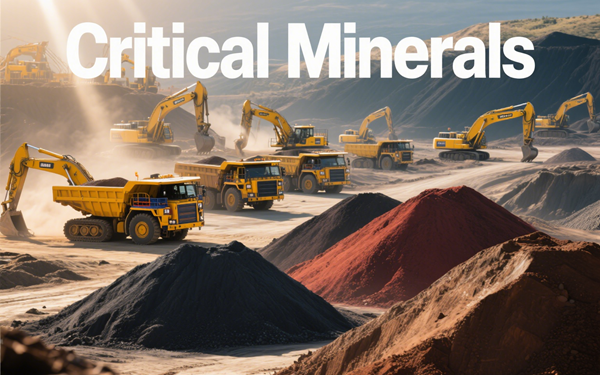
The U.S. government has unveiled a newly proposed critical minerals list, adding copper, potash, and silicon in the most significant update since the list was first introduced in 2018. The draft now includes 54 minerals, with six new additions — copper, silicon, potash, silver, lead, and rhenium — while tellurium and arsenic have been removed. The final list will be released after a 30-day public comment period.
In a related development, sources familiar with the matter revealed that the Trump administration is considering reallocating at least $2 billion from the CHIPS and Science Act to fund critical minerals projects and expand the authority of Commerce Secretary Howard Lutnick over the strategic sector. Since taking office, Trump has moved quickly to boost domestic output of critical minerals by signing executive orders to promote deep-sea mining and other projects. He recently met with the CEOs of Rio Tinto and BHP at the White House to demonstrate support for the U.S. mining industry.
According to the U.S. Geological Survey (USGS), copper and silicon were included due to the severe economic consequences that could result from supply disruptions in their refined forms. Potash was added after updated modeling indicated potential trade risks from major suppliers, particularly Canada.
Industry stakeholders have actively pushed for the inclusion of copper, emphasizing its importance to the economy and national security. It underpins electrification, defense, and clean energy, yet faces growing supply chain pressures. Designation as a critical mineral would make related exploration, mining, and processing projects eligible for financial incentives and streamlined permitting. Meanwhile, the inclusion of potash could help secure tariff exemptions. Canada currently supplies about 80% of U.S. potash imports.
USGS Acting Director Sarah Ryke noted that minerals-related industries contributed more than $4 trillion to the U.S. GDP in 2024. The new methodology helps identify which sectors are most vulnerable to supply disruptions and supports the development of mitigation strategies through domestic investment or international partnerships.
Copper
Mining
Potash Fertilizer
Silver