

Electric Metals (USA) Limited (TSXV: EML; OTCQB: EMUS)
Securing America’s Manganese Supply Chain
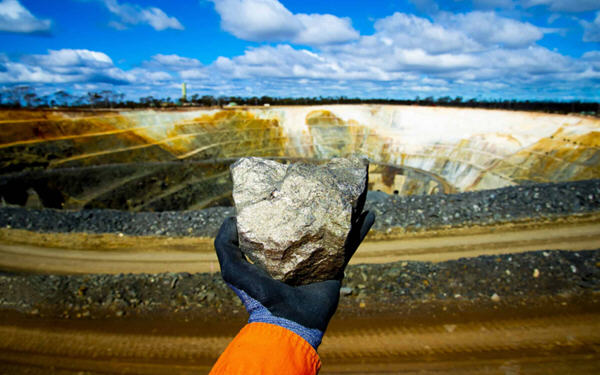
In the past week, two global uranium production giants—Canada’s Cameco (TSX: CCO) and Kazakhstan’s state-owned mining company Kazatomprom—announced reductions in their production targets, sparking widespread concerns over a tightening uranium supply. These successive output cuts are expected to further strain the supply-demand balance in the uranium market and provide strong support for medium- to long-term prices.
Cameco: McArthur River Mine Delays Lead to Annual Output Reduction
On August 28, Cameco announced that due to slower-than-expected ground freezing, development setbacks, and labor constraints at the McArthur River joint venture in Saskatchewan, the company has revised its 2025 production target from the originally planned 18 million pounds of U₃O₈ down to 14–15 million pounds.
Although higher output from the Cigar Lake mine may partially offset this shortfall (providing an additional 1 million pounds), overall supply capacity will still contract significantly. The company emphasized that it will fulfill customer commitments through various means, including spot market purchases, though it is clear that procurement costs in the current market environment have risen noticeably.
Kazatomprom: Voluntary 10% Output Cut for 2026
Kazatomprom stated on August 22 that, in light of a 54% decline in first-half profits and current market conditions, it will reduce its 2026 production by approximately 10% compared to previous targets—from 32,777 metric tons to 29,697 metric tons (a reduction of about 8 million pounds, equivalent to 5% of global supply). This adjustment stems mainly from operational strategy changes at its Budenovskoye joint venture. The company also noted that although long-term contract uranium prices remain stable at around $80 per pound, current market conditions do not justify a return to full production capacity.
It is worth noting that Kazatomprom had already significantly reduced its production targets in 2024 due to sulfuric acid shortages, and its new acid plant will not be operational until at least 2026. Combined with increased mineral extraction taxes, the company’s cost structure is undergoing unfavorable changes.
Growing Supply-Demand Gap May Propel Uranium into a New Upward Cycle
According to data from the World Nuclear Association, mine supply currently meets only 90% of uranium demand, with the remaining 10% relying on secondary supply—which is gradually declining. Meanwhile, 70 nuclear power plants under construction worldwide and the soaring electricity demands of the artificial intelligence industry continue to drive up uranium demand. FocusEconomics predicts a structural supply deficit of approximately 20 million pounds in the uranium market by 2025, potentially expanding to 130 million pounds by 2040, equivalent to a 40–45% supply shortfall.
Although spot prices retreated to $63 per pound after spiking in early 2024, they have since recovered to the $75 level. Analysts generally believe that uranium prices will remain in the range of $65–$80 per pound in the coming years—well above the levels seen in the 2010s.
Miners’ Strategic Shift: From Expansion to Value Management
In response to changing market conditions, major uranium producers are shifting their strategies from pursuing volume growth to emphasizing value preservation. Kazatomprom has explicitly stated that, even with firm long-term prices, it will not blindly raise production to 100% capacity but will instead flexibly respond to market conditions through a 20% operational flexibility mechanism. At the same time, the company is increasing exploration investments to replenish resource reserves and maintain its position as the world’s largest uranium supplier.
Cameco, on the other hand, is leveraging its diversified asset portfolio and risk management capabilities to fulfill contractual obligations while seeking to enhance profitability through opportunities in the spot market.
Investment Insight: Dual Support from Supply Tightness and Energy Transition
Against a backdrop of energy transition and geopolitical factors, nuclear power is regaining attention worldwide, creating long-term rigid demand for uranium. Persistent constraints on the supply side, combined with producers’ focus on capital discipline, are likely to usher in an extended period of tight balance in the uranium market. Although short-term stock prices may fluctuate due to market sentiment, uranium miners—underpinned by solid fundamentals—retain strong pricing power and earnings recovery potential.
For investors, the structural gap in the uranium market is not a short-term phenomenon but an investment theme that will persist over the next decade. As industry leaders, the production decisions of Cameco and Kazatomprom will not only impact short-term uranium prices but may also reshape the supply dynamics of the entire nuclear energy industry chain.