
1911 Gold Corporation (TSXV: AUMB; OTCQX: AUMBF)
1911 Gold is Manitoba’s Gold Standard - Ready, Permitted and High-Grade 1911 Gold is an Emerging Gold Producer, with Significant Cash Flow Generation and District-Scale Growth Potential
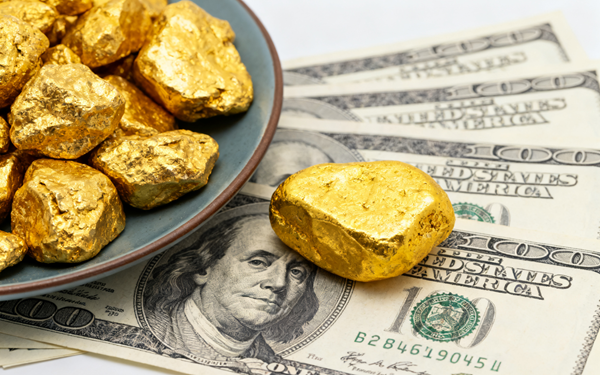
Driven by gold prices repeatedly hitting new historical highs since 2025, gold stocks are experiencing unprecedented prosperity, delivering some of the richest returns in the market for investors.
In the first week of September, gold set new record highs six times within seven trading days. With a year-to-date surge of nearly 40%, it has become one of the top-performing assets this year. Propelled by the rising gold price, the NYSE Arca Gold Miners Index hit a new all-time high this month, surpassing its 2011 peak. Individual stocks like Sibanye-Stillwater, AngloGold Ashanti, and Gold Fields have each gained over 150% year-to-date, while SSR Mining skyrocketed an impressive 220%.
Analysts at Bank of America (BofA) pointed out that although momentum in the mining sector is strengthening and the total market capitalization of the global gold industry has now exceeded $550 billion, it currently represents only 0.39% of the total global equity market capitalization. BofA believes that if the current cycle persists long enough, this share could potentially return to its 2011 peak of 0.71%. Based on the current total global equity market capitalization, this implies the gold industry’s market cap could reach $990 billion.
Meanwhile, valuations in the mining sector remain below previous peaks. The 12-month Enterprise Value to EBITDA (EV/EBITDA) multiple stands at 11.0x, below the 2020 peak of 15.4x. The Price to Net Asset Value (P/NAV) is 1.88x, lower than the 2020 peak of 2.27x and the 2011 peak of 2.19x. BofA stated that both metrics suggest room for valuation expansion. If current multiples are adjusted for the spot gold price, the sector’s next-twelve-month (NTM) EV/EBITDA multiple should be 11.7x, and the current P/NAV should be 1.39x.
When gold prices rise, gold stock prices typically rise even faster, demonstrating significant leverage effect. The reason lies in miners’ relatively fixed costs; after accounting for set mining, crushing, and processing expenses, the premium for each extra ounce of gold flows directly to the bottom line. The All-In Sustaining Costs (AISC) for major producers range between $1,080 and $1,220 per ounce, while the current spot price is as high as $3,600 – more than triple the cost – resulting in exceptionally robust profit margins.
Compared to traditional miners, Royalty and Streaming companies are particularly noteworthy, a view reinforced by their Q2 and first-half 2025 results. Franco-Nevada reported a record quarterly revenue, up 42% year-over-year, with operating cash flow surging 121%, net profit doubling, and adjusted EBITDA margins also hitting a new record. Wheaton Precious Metals delivered all-time highs in both revenue and operating cash flow in the second quarter. Triple Flag Precious Metals achieved record operating cash flow per share and has seen steady revenue growth for the past seven consecutive quarters.
Unlike past cycles where cash-flush companies pursued reckless expansion, gold companies in 2025 are demonstrating capital discipline. Management teams are focused on operational efficiency, strengthening balance sheets, and shareholder returns, channeling free cash flow into dividends and share buybacks. Free cash flow across the industry has surged, and return on invested capital has hit multi-year highs. This culture of restraint makes the current rally fundamentally different from previous bull markets.