Glencore’s 20-year deal with Discovery Green to supply about 290 GWh a year of renewable power to three Mpumalanga coal complexes from 2027 is not a branding exercise. It is a statement that the cost and reliability of electrons now sit alongside grade, strip ratio, and logistics as primary value drivers in southern African mining. For juniors watching from the sidelines, the lesson is practical: plan your power like you plan your drill program.
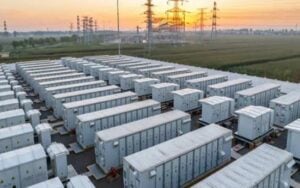
Power hedging for coal assets: why this deal pencils out. South African miners face two binding constraints—price escalation and reliability under Eskom, and rising investor pressure to cut Scope 2 emissions. A 290 GWh annual supply equates to roughly 33 MW of average load (290,000 MWh divided by 8,760 hours). That is the output of a modest wind farm or a larger solar array with some storage, delivered via wheeling. Replacing the majority of a site’s power with lower-cost renewables can lower operating costs, smooth production through outages, and cut Scope 2. Coal operations pull heavy loads for draglines, conveyors, ventilation, and processing plants. They run 24 hours. Pure daytime solar does not do that alone, so a credible mix likely blends wind, solar, and contracted grid backup. The business case is straightforward: lock in predictable tariffs against historic Eskom increases and avoid the lost-tonnage penalty of load curtailment.
South Africa’s wheeling reality: promise and potholes. The likely pathway here is wheeling—generating power where the resource is strongest and using the Eskom network to deliver to the mines near eMalahleni. Mpumalanga has transmission capacity built for legacy coal, but some of the best solar and wind resources sit elsewhere, especially in the Northern Cape and coastal corridors. That sets up a logistics question for electrons rather than ore. Investors should note the red flags. Grid access is allocated and can be delayed. Curtailment rules and wheeling tariffs are evolving and can erode expected savings. A 2027 start date signals long-lead tasks: environmental approvals, grid connection studies, land rights, and equipment procurement. Any slippage pushes savings to the right. These are execution risks typical of generation projects, now embedded in mine operating risk. The mitigating factor is that long-term power purchase agreements can still price below industrial grid tariffs in South Africa, even after wheeling and balancing charges, given the step-change in renewable unit costs.
What this signals for juniors: build energy strategy into the geology. Too many early-stage studies still treat power as a placeholder line item. That is a mistake. The next cycle’s winners will dovetail resource development with energy sourcing from day one. Juniors with assets in high-irradiance or high-wind regions can design behind-the-meter solutions sized to critical loads, or pre-negotiate wheeling capacity to scale with their mine plan. The youngest CEO in uranium this week said he focuses on markets and finance rather than geology. That approach applies to power. If you cannot secure low-cost, reliable electrons, your grade advantage may not show up in the cash costs. Even a modest 10 percent reduction in site power costs can move pre-tax NPV and mine life cash flows meaningfully for energy-intensive operations. In a feasibility model, every cent per kilowatt-hour shows up in all-in sustaining costs.
Capital discipline beats capex bloat in power procurement. The Ari Sussman playbook—sequence development, outsource risk, focus on value-accretive steps—fits power. Third-party renewable developers carry permitting and construction risk and raise their own project finance against the PPA. The miner secures offtake at a fixed or indexed tariff and avoids tying up scarce equity in non-core infrastructure. For juniors, the lesson is to resist the temptation to build and own generation unless it is a strategic moat or a necessity. A portable, right-sized PPA with flexible volumes and termination options is cleaner for a balance sheet. Align contract tenor with realistic mine life and expansion optionality. A 20-year take-or-pay can become a liability if your deposit underperforms, unless the PPA is assignable to a successor or another load in your portfolio.
Valuation impact and risk transfer. Cheap, firm-ish power lowers unit costs, but PPAs also shift new risks onto the mining income statement: counterparty, curtailment, and shaping risk. Counterparty matters. Discovery Green sits within Discovery Limited, a large South African financial group. That brings balance sheet depth but limited long-history in generation. Investors should watch for the developer’s pipeline, financing partners, and EPC track record. On shaping, renewable output rarely matches a mine’s load profile. If the miner must buy balancing from the grid at peak rates or curtail production, the savings narrow. Sensitivity tests in technical reports should show tariff assumptions by time-of-use block, expected curtailment, and penalties. The prize is real. In many South African cases, blended renewable tariffs can undercut industrial grid rates and deliver stability in rand terms, which aligns with rand-denominated operating costs even when revenues are in dollars.
ESG optics aside, Scope 2 cuts protect operating continuity. Powering coal mines with renewables will draw accusations of optics. But reduce the problem to fundamentals: emissions from diesel and grid electricity are within the miner’s control; combustion of the product is not. Cutting Scope 2 lowers a measurable cost of capital for some producers, widens the pool of lenders and offtakers, and can reduce local permitting friction. In South Africa, where communities and regulators are grappling with load shedding and air quality, a mine that eases its draw on the grid and invests in local generation buys resilience. For juniors in other commodities—uranium, zinc, gold—the same logic holds. A credible decarbonization plan can expand financing options on better terms. Even where border adjustments do not yet hit your commodity, investors are paying for lower operational emissions with lower discount rates.
Red flags to monitor between now and 2027. Delivery hinges on four choke points: grid access, storage, mine life alignment, and policy stability. Grid access must be secured early; the best resource nodes are congested. Storage or firming contracts must be sized to the mine’s night shift and peak loads. Mine life alignment matters—do not sign for 20 years if you have seven years of reserves and no clear pipeline, unless the PPA has step-downs or transfer rights. Policy is shifting as South Africa unbundles its electricity market. Wheeling fees, balancing charges, and curtailment frameworks may change. FX adds a twist: if your PPA is rand-linked but your revenue is dollar-linked, depreciation can amplify savings; the reverse also holds. Do the math in both currencies. None of these are deal breakers, but they are the questions that should be on every diligence checklist.
What to watch in juniors this week. The mining.com note on the young uranium CEO underscores a broader pivot: leadership that treats capital and markets—not just geology—as the main levers. The zinc-stock investigation is a reminder that exploration upside and execution risk go hand in hand. Apply both lenses to energy. Ask every junior, from uranium to base metals, three simple questions. Where will your electrons come from. What price path are you underwriting. How will you keep the mill running when the grid does not. The Glencore-Discovery Green agreement shows that even the largest, most controversial products compete on the same input—power. In this market, the cheapest reliable kilowatt-hour is as critical as the highest-grade intercept.