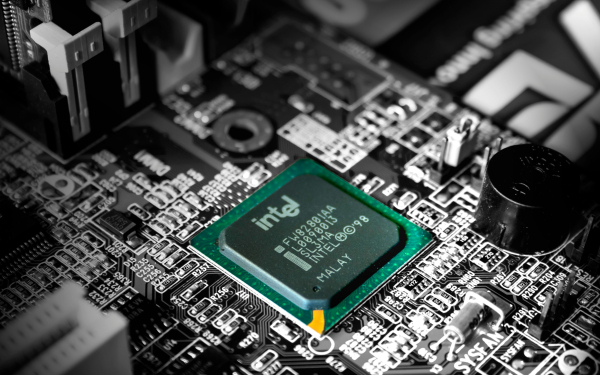
Intel Corp. (INTC) staged a powerful comeback in its latest quarterly report, snapping a prolonged streak of losses and issuing an optimistic forecast that sent its shares surging more than 7% in after-hours trading. The chipmaker’s stock has now rallied over 85% year-to-date, dramatically reversing its former position as a laggard to become one of the top performers in the Philadelphia Semiconductor Index.
The third quarter, ended September 27, marked a significant turning point. Intel reported revenue of $13.7 billion, a 3% year-over-year increase. Crucially, it delivered adjusted earnings of 23 cents per share, dramatically outpacing Wall Street’s estimate of one cent. The company posted a net income of $4.1 billion, a stark reversal from a staggering $16.6 billion loss in the same period last year, ending its longest continuous loss streak in 35 years.
Chief Financial Officer David Zinsner attributed the resilience to underlying strength in core markets, noting that current demand is outstripping supply—a trend he expects to persist into 2026. The Client Computing Group, buoyed by a corporate PC refresh cycle linked to Windows updates, generated $8.5 billion in revenue, surpassing market expectations of $8.2 billion.
While the recent separation of its Altera programmable chip unit is projected to reduce fourth-quarter revenue by $4 billion to $5 billion, Intel’s underlying guidance remains strong. Excluding this impact, the company’s Q4 revenue forecast of approximately $13.3 billion still topped analyst estimates.
Despite the broad recovery, significant challenges persist. Intel remains a distinct underdog in the artificial intelligence race. Revenue from its Data Center and AI unit fell 1% to $4.1 billion. Its foundry business, while narrowing its operating loss to $2.3 billion from $5.8 billion a year ago, remains almost entirely reliant on internal orders, making external customer acquisition critical for its path to profitability.
“Building a great company is a journey, and we are moving at speed to improve our execution across the business,” said CEO Lip-Bu Tan on the earnings call. Since taking the helm in March, Tan has maintained his predecessor’s strategic direction while enforcing stricter financial discipline, including pausing expansion into projects with uncertain returns. This fiscal prudence, however, raises concerns about technological competitiveness; a planned $28 billion chip factory in Ohio has been delayed until after 2030.
Strategic infusions have bolstered market confidence this year. Intel has secured approximately $15 billion in new capital, including $9 billion from the U.S. government, a $5 billion strategic investment from Nvidia, and $2 billion from SoftBank. The U.S. government’s grant, structured with an uncommon warrant provision, is seen by analysts as a potent signal that Washington will not let the national chip champion fail.
Acknowledging Nvidia’s dominance in AI training chips, CFO Zinsner suggested a potential opportunity lies in the AI inference market. As more models complete training, demand for lower-cost, lower-power CPUs for inference could rebound, potentially benefiting Intel’s data center business.
Analysts suggest that for Intel to truly reclaim its industry leadership, it must achieve a technological breakthrough in AI chips and successfully attract major external clients to its fledgling foundry operations. Propelled by a cyclical PC market recovery and a strong vote of strategic confidence, the iconic chipmaker is firmly on a rebuilding track, yet the road ahead remains fraught with competition and execution risks.