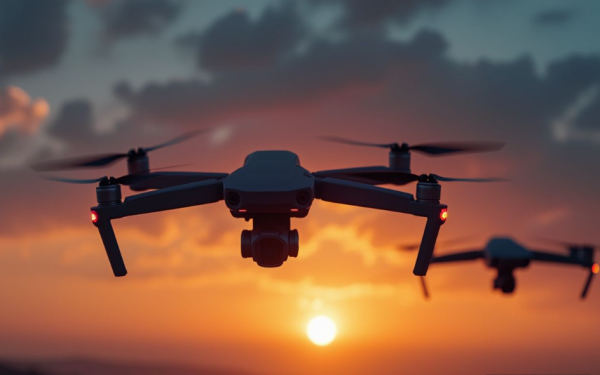
If any company’s fate has been radically reshaped by a war, it is drone pioneer AeroVironment (AVAV). The industry veteran, which went public in 2007 with a modest market cap of $430 million, languished in relative obscurity for nearly a decade. Then, the war in Ukraine changed everything. Harnessing this geopolitical windfall, the company has achieved a stunning leap: revenue growth of 143.6% and a stock price surge of 347.5% since the conflict began.
However, as the battlefield has proven the disruptive value of unmanned systems, it has attracted more than just defense contracts. Deep-pocketed tech titans and established defense behemoths are now entering the fray. Facing a multi-front assault from tech innovators like Alphabet, Tesla, and Joby Aviation, alongside traditional defense giants like Lockheed Martin, this innovation-born pioneer now confronts a profoundly asymmetric battle defined by a stark resource and scale disadvantage.
AeroVironment’s ascent is inextricably linked to the evolution of modern warfare. Prior to the Ukraine conflict, drones, while important, were largely viewed as niche reconnaissance tools. Post-February 2022, that perception shattered. Drones became core assets for reconnaissance, attack, and defense for both sides, their revolutionary potential fully unleashed.
This paradigm shift has translated directly into financial terms. The U.S. Army recently announced plans to procure at least one million drones in the coming years. As one of the first companies to successfully commercialize drone technology, AeroVironment emerged as a direct and major beneficiary of this demand surge, its market status elevating from “participant” to “benchmark.”
The battlefield validated the market, but also ignited a commercial war. AeroVironment’s competitive landscape is now fundamentally transformed:
Compared to these rivals, AeroVironment’s scale and resources pale. Its moat has been built almost entirely on years of technical focus and first-mover advantage. Under the “asymmetric” assault of giant capital and ecosystem power, that moat faces its sternest test.
Despite the looming competitive clouds, AeroVironment’s shareholders have reveled in stellar returns in recent years:
This perfectly illustrates the investment philosophy of “holding the right stock at the right time.” Yet, it raises the central question: As the initial pulse of “war dividends” normalizes and the “post-war” market becomes crowded with giants, can its high-growth narrative continue?
AeroVironment’s story is a classic case of a technology pioneer leveraging a historic opportunity to leap forward. It proves the immense value of focus and innovation when the timing is right. Yet, it may also become a business parable of a “pioneer” facing a “harvest” by giants.
The drone battlefield has turned from blue ocean to red ocean. What AeroVironment must now prove is not only that its technology remains in the lead, but that its business model possesses sufficient resilience and uniqueness to defend the skies it helped pioneer against a full-spectrum competition of capital, talent, and ecosystem power. This asymmetric battle is just beginning.