

Southern Silver Exploration Corp. (TSXV: SSV, SSEV: SSVCL, OTCQX: SSVFF)
Southern Silver, a low-risk junior development company with substantial upside potential that is emerging as one of the premier Ag-Pb-Zn companies in Mexico
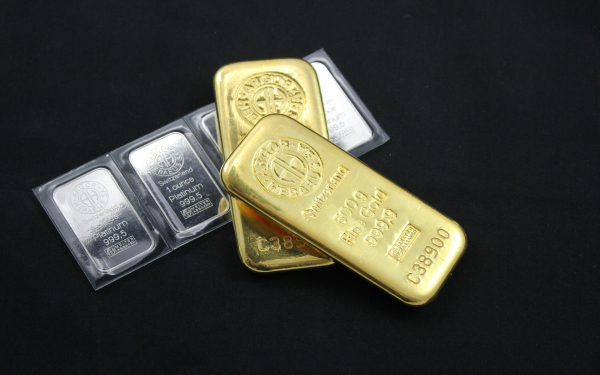
In April 2025, the precious metals market witnessed a historic moment: the gold–silver price ratio broke above 100:1, approaching its highest level in modern market history. In other words, it took more than 100 ounces of silver to buy a single ounce of gold. Yet in less than nine months, by early 2026, that ratio has collapsed to around 50:1 — the lowest level since March 2012. Behind this dramatic shift is silver’s explosive performance: silver soared 147% over 2025, far outpacing gold’s 67% gain.
The gold–silver ratio, which measures how many ounces of silver are needed to purchase one ounce of gold, is a composite indicator shaped by both market sentiment and underlying fundamentals. Its rapid compression signals deep changes underway in the precious metals complex.
From the fixed exchange relationships of the Roman Empire to the freely floating prices that emerged after the collapse of the Bretton Woods system in 1971, the gold–silver ratio has evolved from a quasi-official standard into a highly volatile market gauge. In the modern era, history points to a clear pattern: when the ratio rises to extreme levels — typically above 80:1 — silver tends to be severely undervalued relative to gold. What often follows is a powerful “mean reversion,” with silver dramatically outperforming gold and the ratio falling sharply.
The moves from over 100:1 in April 2025 to roughly 50:1 today are a textbook example of such a compression phase. Investors who recognized that extreme reading as a signal and increased their silver exposure at those levels went on to capture the metal’s subsequent surge and generate significant excess returns.
Silver’s recent rally has been driven by a convergence of powerful short‑term forces. Speculative activity is at the forefront: a large‑scale short squeeze in silver, layered on top of a tightening in physical supply, has fueled aggressive price swings. Social media–driven “meme investing” has further amplified volatility, as online narratives and retail trading flows have magnified each price move.
At the same time, robust industrial demand has provided fundamental support. Since 2020, the solar photovoltaic sector has accounted for 58% of the incremental growth in silver consumption, making it a key pillar of demand. The spread of electric vehicles and the development of emerging solid‑state battery technologies — particularly those using silver–carbon anodes — add to silver’s longer‑term growth story.
On the supply side, structural constraints are reinforcing the bull case. Roughly 80% of global silver production comes as a byproduct of mining for base metals such as copper, lead and zinc. This means silver output cannot easily be ramped up in response to higher prices alone, limiting the market’s ability to quickly increase supply and dampening short‑term price elasticity.
Against the backdrop of a silver boom, more cautious institutional voices are beginning to emerge. Analysts at Bank of Montreal (BMO) have issued a measured warning. While acknowledging that geopolitical tensions and speculative demand could continue to support silver prices in the near term, BMO expects a growing surplus in physical silver over the coming years. In their view, this is likely to push the gold–silver ratio higher again over time.
The bank’s analysts also highlight that silver demand in the solar sector “may have already peaked,” and argue that an expansion in supply is the broader trend to watch. Their assessment stands in contrast to the prevailing market excitement and underscores the risk that the current tightness in silver may not be permanent.
History has repeatedly shown that when the gold–silver ratio climbs to extreme highs, it often marks a critical allocation signal. Investors who acted decisively when the ratio exceeded 100:1 in April 2025 have already seen how quickly such an opportunity can play out in their favor.
The outlook for silver in 2026 is shaped by a mix of bullish and bearish forces. On the supportive side are continued geopolitical risks, the long‑term demand associated with the global green transition, and a generally constructive environment for precious metals as an asset class. These elements together help sustain interest in silver as both an industrial metal and a store of value.
On the risk side, speculative long positions in silver have become crowded, raising the possibility of sharp corrections if sentiment turns. Growth in solar‑related silver demand appears to be slowing, and elevated prices may accelerate research into material substitution, potentially curbing future usage. A crucial swing factor will be the commercial rollout of solid‑state batteries. If these technologies achieve large‑scale production in the coming years, they could open up a fresh source of structural demand for silver.
The violent move from 100:1 to 50:1 has once again highlighted the central role of the gold–silver ratio in precious metals investing. The ratio is not just a mirror reflecting market sentiment; it is also a key yardstick for assessing relative value between gold and silver.
For investors, the essential task is not to buy into the frenzy at any price, but to understand the deeper forces driving shifts in the ratio. History suggests that extremes tend to revert, but the challenge — and the opportunity — lies in recognizing where we are in the cycle and maintaining a clear, disciplined perspective amid market noise.