
Pinnacle Silver & Gold Corp (TSXV: PINN)
Building a New Americas-Focused Silver and Gold Company
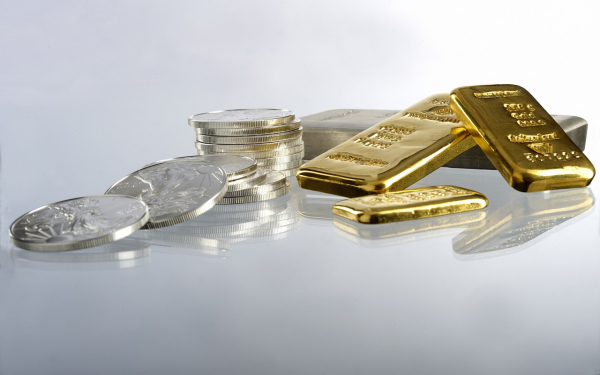
After a stunning year in which gold surged nearly 65%—trailing only silver and platinum group metals and crushing most major asset classes—investors are now asking: Can the precious metals party continue in 2026?
Gold’s 2025 performance was a textbook case of a volatile breakout. Starting the year at $2,622 per ounce, it weathered post-election turbulence following Donald Trump’s return to office, finally breaking to a new all-time high above its previous record in April.
After a four-month consolidation, the metal embarked on a major bull run in September, peaking at $4,381.44 on October 19. The volatility inherent in such a powerful rally was on full display the very next day, when prices crashed from a high of $4,375 to a low of $4,080 in a single session. Yet, buying momentum proved resilient. Gold rallied once more into year-end, setting a fresh record of $4,550 on Christmas Eve and finally closing the year firmly above the $4,300 support level.
Expectations for the coming year reveal a stark divide in market sentiment.
Retail investor optimism is rampant. According to the Kitco News Annual Gold Survey, 29% of retail respondents see gold surpassing $6,000/oz next year, while 42% forecast a range of $5,000-$6,000. In total, a striking 90% believe prices will set new highs, with only 10% predicting a drop below $4,000.
In contrast, major financial institutions project continued gains but with notable restraint, with none forecasting a repeat of 2025’s percentage surge.
This gap highlights a core market tension: retail enthusiasm driven by wealth effects and FOMO (Fear Of Missing Out) versus the more measured, model-based approaches of institutional analysts.
Analysts point to several pillars expected to support gold in 2026:
However, risks are bilateral. Juan Carlos Artigas of the World Gold Council warns that a soft economic landing, effective policy, and a stronger dollar could trigger a 5-20% correction—a reminder that significant optimism is already priced in.
Silver lived up to its reputation as the more volatile metal, skyrocketing 160% in 2025. Its plunge of 9% in a single day after briefly breaking above $84/oz was a stark example of its explosive and fragile nature.
Analysts often use the Gold/Silver Ratio (GSR) to gauge silver’s potential path:
Beyond gold’s coattails, silver faces its own acute supply-demand squeeze. China, which supplies 60-70% of global refined silver, has imposed export restrictions, potentially worsening a structural deficit. Société Générale warns of a potential “physical delivery crisis,” where industrial users cannot obtain metal and are forced into cash settlements—an event that could trigger a sharp, short-term price spike.
The fundamental bull case for precious metals in 2026 remains intact. Structural demand from central banks and portfolio diversification provides a floor, while geopolitical and policy uncertainty offers upward momentum.
Yet, whether the current “frenzy” can persist hinges on how much future optimism is already priced in. The wide gap between retail ambition and institutional targets suggests a year of high volatility and divergent views. Silver, with its tighter fundamentals and higher speculative appeal, will likely see even wilder swings.
For investors, 2026 may not offer the one-way rally of 2025. Instead, it may present a more challenging arena requiring greater skill, risk tolerance, and a careful balance between exuberance and rationality—where chasing return potential must be tempered with a deep respect for the potential of sharp corrections.