U.S. Forges Critical Minerals Alliance with Over 50 Nations to Counter China’s Dominance
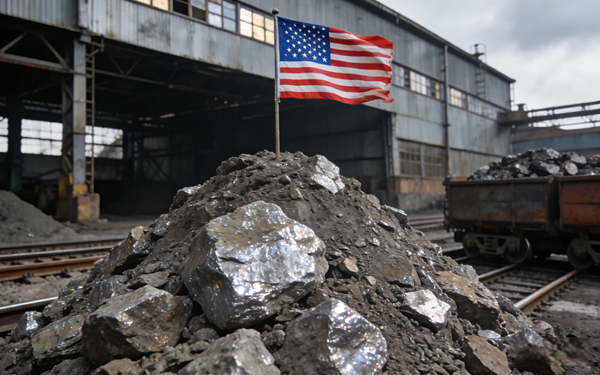
The United States is spearheading a sweeping coalition with over 50 nations, including the European Union, Japan, and Mexico, to orchestrate a coordinated strategy on critical minerals. This move marks a significant escalation in global efforts to dismantle China’s dominance in supplying materials vital for defense, high-tech industries, and the clean energy transition.
The initiative, announced following a Critical Minerals Ministerial meeting in Washington, aims to create a “binding plurilateral agreement” among like-minded partners. U.S. Trade Representative Jamieson Greer stated that the U.S., European Commission, and Japan would develop joint “action plans for critical minerals supply chain resilience,” with a memorandum of understanding expected within 30 days. These plans would feature coordinated trade policies, including mechanisms like border-adjusted price floors, designed to mitigate supply chain vulnerabilities.
A parallel 60-day action plan was unveiled with Mexico, focusing on similar collaborative trade policies and identifying specific mining and processing projects in both countries and selected third nations.
“Failing” Market and a Call for “Preferential Trade” Zone
Central to the strategy is an attempt to impose price discipline and create a protected market bloc. In stark terms, U.S. Vice President JD Vance declared the international critical minerals market “failing,” citing volatile and unpredictable prices that have scuttled mining investments.
“The goal is diversifying global supply… while strengthening the partner countries who help all of us in the shared effort,” Vance stated. As a remedy, he pitched a “preferential trade center” for critical minerals, insulated from external disruptions. This zone would establish coordinated reference price floors for materials at each production stage, enforced by adjustable tariffs for member countries.
“Project Vault”: A $12 Billion Strategic Stockpile
The diplomatic push is backed by substantial financial firepower. Earlier this week, President Donald Trump announced the launch of “Project Vault,” a nearly $12 billion strategic stockpile for rare earth elements and other critical minerals. The reserve, initially funded by a $10 billion loan from the U.S. Export-Import Bank and $1.67 billion in private capital, aims to shield manufacturers from supply shocks.
Momentum is building in Congress to further empower the effort. Senators are set to introduce legislation to reauthorize the Export-Import Bank for a decade, potentially injecting an additional $70 billion to support the critical minerals agenda.
Global Resource Grab: From Canada to the DRC
The coalition’s formation is triggering a realignment in global resource projects, directly tying them to the U.S.-led supply chain:
- North America: The U.S. Department of Defense and Canada have a co-investment deal to accelerate Canadian mining development, though Canada’s exclusion from the new formal trade announcements was notable.
- South America: Argentina signed a critical minerals agreement with the U.S. on Wednesday to strengthen supply chain security.
- Africa: Ivanhoe Mines is in advanced talks with Congo’s state miner Gecamines and trader Mercuria to route zinc concentrate from its Kipushi mine to “Project Vault.” Similarly, Glencore and the U.S.-backed Orion Critical Mineral Consortium announced a deal to channel Congolese cobalt and copper into the U.S. supply chain.
- Australia: Positioned as a core hub, Australia is seeking international financing for nearly 80 critical minerals projects. Sunrise Energy Metals, whose Syerston scandium project in New South Wales is likely to supply the U.S. stockpile, has already secured a $67 million letter of interest from the U.S. Ex-Im Bank.
Background and Rising Tensions
This multi-pronged campaign reflects a top U.S. priority: breaking China’s stranglehold on critical minerals, a concern heightened after Beijing imposed retaliatory export controls during the ongoing trade war. However, the push comes amid a complex backdrop where the Trump administration’s “America First” policies, including tariffs and unilateral actions, have simultaneously strained the multilateral alliances it now seeks to lead for this endeavor.
Analysts observe that the competition is evolving from a technological race into a systemic restructuring of global trade rules, financial tools, and geopolitical alliances, poised to reshape the world’s resource landscape fundamentally.
China News
Cobalt
Copper
Zinc