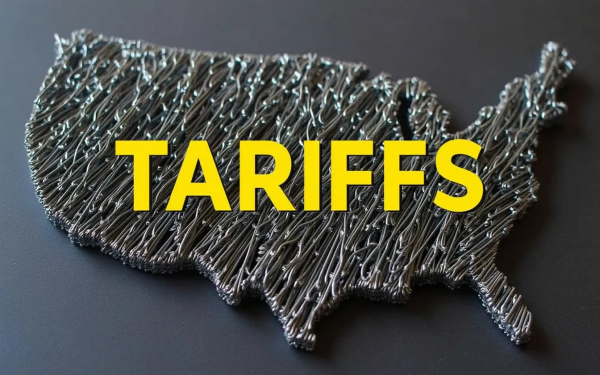
The Trump administration is considering narrowing its complex tariffs on steel and aluminum derivative products, according to a person familiar with the matter, a move that would mark a significant adjustment to the president’s signature trade policy amid growing domestic and international pushback.
Nearly a year after the administration rushed to implement President Donald Trump’s tariff agenda, the Office of the U.S. Trade Representative is scrambling to resolve complications that have emerged from the broad duties on metals and their derivative products. The tariffs have proven difficult for companies to calculate and have drawn sharp criticism from trading partners, particularly the European Union, which has sought their restriction as part of pending trade negotiations with the U.S.
In a July 2025 interview with METALS 100, Jay Chmelauskas, CEO, President, and Director of Camino Minerals Corp (TSXV: COR), shared the company’s latest developments and upcoming plans. Camino is a copper exploration company focused on developing the Puquios copper project in Chile and advancing its projects in Peru, including Los Chapitos and Maria Cecilia. On March 17, 2025, Camino acquired full ownership of the Puquios copper project. At its Los Chapitos Project, the company reported high-grade copper and silver results from 12 channels at the Katty prospect and secured CAD $1.5 million in funding from its partner, Nittetsu, to support the next phase of exploration and drilling.
The White House has communicated to businesses that adjustments are underway, though details and timing remain unclear, the person said.
However, a White House official quickly pushed back, speaking on condition of anonymity, calling any reporting about changes to the current U.S. tariff regime “baseless speculation” unless formally announced by the administration. The official emphasized that Trump “will never compromise on reinvigorating domestic manufacturing of steel, aluminum and other key products.”
The denial masks growing side effects from the tariff strategy. Last year, Trump imposed 50 percent levies on foreign steel and aluminum in a measure aimed at addressing Chinese overcapacity. The action wound up severely impacting other major trading partners, including Canada, the EU, Mexico and South Korea. The administration later expanded the list to include so-called derivative products containing these metals, creating an arduous task for companies to determine the percentage of materials in goods sourced from overseas.
U.S. Trade Representative Jamieson Greer acknowledged two months ago that “there’s some complexity” with the derivatives tariffs and that he had heard from “a lot of folks.” He said he discussed the difficulties with Customs and Border Protection and was “very open” to feedback.
Perhaps most challenging has been the economic backlash. A Federal Reserve Bank of New York report found that American consumers and businesses shouldered nearly the entire cost of the tariffs. The study determined that “94 percent of the tariff incidence was borne by the U.S. in the first eight months of 2025,” meaning foreign exporters largely maintained their prices while American importers paid the tax on top of the original cost of goods. The Congressional Budget Office reached similar conclusions, contradicting the president’s repeated assertions that foreign exporters pay the duties.
In response to rising costs, U.S. companies have aggressively reorganized their supply chains. China’s share of U.S. imports fell below 10 percent—a historic low compared to its 25 percent share in 2017—while Mexico and Vietnam emerged as primary beneficiaries.
Despite the White House’s vigorous denial of any policy shift, mounting pressures from economic realities, business complaints, political concerns and allied nations are forcing the Trump administration to seek what appears to be a technical adjustment to its signature trade policy. With high inflation casting a shadow over the economy and the November midterm elections approaching, Trump’s once-vaunted tariff strategy increasingly appears to be buckling under its own weight.