
Prismo Metals Inc. (CSE:PRIZ)
A leadership team with a proven ability to explore, operate and develop precious metal discoveries.
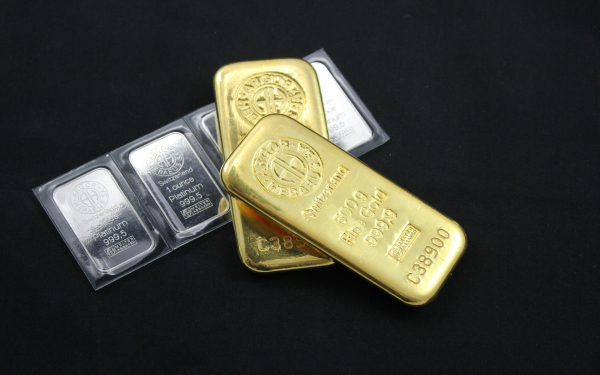
Gold and silver prices surged midday Tuesday as escalating geopolitical tensions in the Middle East and a weaker US dollar drove investors toward safe-haven assets. April gold futures jumped $115.80 to $5,217.20 per ounce, while May silver soared $5.087 to $89.59. The rally comes amid conflicting signals from the White House regarding the conflict with Iran, keeping markets on edge.
Despite recent volatility and record-breaking runs, the bull market for precious metals is far from over, according to BlackRock’s top exchange-traded fund strategist for the Americas. “After a record run – and a sharp decline – where do precious metals go from here?” asked Kristy Akullian, Head of iShares Investment Strategy for the Americas at BlackRock. “The rush for gold comes from a variety of buyers, ranging from central banks to cryptocurrencies.”
Gold has soared 75% over the past year, surpassing $5,000 an ounce for the first time in January before tumbling 12% at month end, she noted. Silver rose 148% in 2025 and added another 19% in January – even after accounting for a 26% decline on Jan. 30. “Volatility in gold and silver has jumped 46% and 106% year-to-date respectively, reinforcing that this rally is powerful, but not without risk,” Akullian added.
Akullian attributes the precious metals’ performance to three main catalysts:
Central bank buying has fundamentally reshaped global gold demand. From 2022 to 2025, central banks steadily increased gold reserves to diversify away from the US dollar. Last year, gold overtook US Treasuries as the largest share of global reserves for the first time in 30 years.
A 2025 survey showed 95% of central banks expect global gold reserves to rise in 2026, up from 81% in 2024 and 52% in 2021, BlackRock noted. With economies like China and Brazil still holding less than 10% of their reserves in gold, central bank buying “has the potential to remain a key support driver,” Akullian said.
Private wealth allocations to gold are about 50% below levels seen a decade ago, suggesting room for incremental demand, she added. India and China together have accounted for almost 60% of global consumer gold demand in recent years, while North America and Europe combined have represented only about 15%.
Emerging buyers are also entering the market. Tether, the world’s largest stablecoin issuer, has accumulated roughly 140 tons of gold – equivalent to the 33rd-largest gold reserve globally. Stablecoins have grown from $28 billion in 2020 to over $280 billion in 2025, with projections ranging from $1.9 trillion to $4 trillion by 2030.
Global data-center computing capacity has expanded from about 1 gigawatt in 2000 to nearly 50 gigawatts today, supporting large-scale buildout of silver-intensive computing infrastructure. Solar photovoltaic technology accounted for nearly 29% of total silver industrial demand in 2024, up from about 11% in 2014. Along with electric vehicles and expanding AI infrastructure, solar power is expected to remain a key driver of silver demand growth through 2030.
In asset allocation, gold and silver play complementary roles, according to Akullian.
“Gold has historically functioned as a strategic ballast, particularly during equity market drawdowns, exhibiting low or even negative correlation to equities when diversification matters most,” she wrote. “Silver can help enhance diversification over full market cycles by offering greater upside potential during periods of economic expansion, reflation, and industrial growth.”
“Gold and silver can help investors seek to balance resilience with opportunity by pairing diversification with exposure to long-term structural demand.” While forecasting precious metals prices is notoriously difficult – they have no cashflows or future earnings to discount – BlackRock sees the demand backdrop as constructive. Falling real rates make the lack of cashflows less costly, and many demand drivers that fueled 2025’s remarkable returns remain in place.
“We may still be in the early stages of a wave of demand from new sources such as central banks, cryptocurrencies and the AI buildout – though rallies of 2025’s magnitude are rarely repeated,” Akullian concluded.