SLAM Exploration Ltd. (TSXV: SXL)
‘Exploring for critical elements and precious metals in New Brunswick, Canada.’
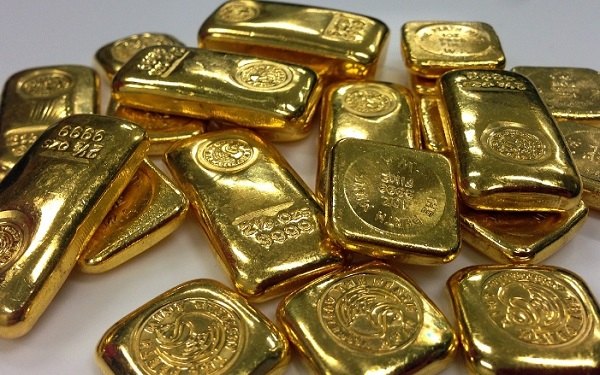
Since the beginning of this year, gold stocks experienced a strong rally in the early months, but have recently declined sharply alongside gold prices. Market concerns primarily stem from the fact that inflationary pressures, coupled with rising oil prices, may prompt the U.S. Treasury to curb inflation through interest rate hikes.
Gold prices typically face pressure during inflationary cycles. Since gold does not generate dividends or interest, when inflation runs high, central banks such as the Federal Reserve often raise interest rates to cool the economy. As interest rates rise, U.S. Treasury bonds and high-yield savings accounts, which offer guaranteed returns, become more attractive than gold.
Newmont Corporation (NEM) has seen its stock price fall more than 4% this year, with a decline of over 21% in the past month. Barrick Mining Corporation (B) has experienced an even steeper drop, falling more than 22% this month and over 14% year-to-date. This correction may offer patient investors an opportunity to accumulate positions in these two quality gold stocks at lower levels.
The following three factors form the basis for a positive outlook:
Headquartered in Denver, Newmont is the world’s largest gold producer, also mining significant amounts of silver, copper, lead, zinc, and other minerals, with 12 Tier 1 core assets across eight countries. In 2025, the company reported earnings per share of $6.39, a significant increase of 123% year-over-year, and free cash flow of $7.3 billion, up 150%. Driven by strong results, the company reduced its debt by $3.4 billion and maintained $2.1 billion in cash. In the fourth quarter, its average realized gold price was $4,216 per ounce, while all-in sustaining costs were just $1,302 per ounce. Even with high oil prices driving up costs, the current gold price above $4,500 per ounce still leaves ample room for profit.
Headquartered in Toronto, Barrick Mining is the world’s second-largest gold producer, operating ten mines across 17 countries. In 2025, the company generated free cash flow of $3.87 billion, an increase of 194% year-over-year, with earnings per share of $2.93, up 140%. The company repurchased $1.5 billion of its shares during the year. In the fourth quarter, the average realized gold price was $4,177 per ounce, with all-in sustaining costs of $1,581 per ounce.
Newmont raised its dividend by 4% this year to $0.26 per share, translating to a dividend yield of approximately 1.05% based on the current stock price. Despite occasional reductions, the company has paid dividends for 38 consecutive years, with a current payout ratio of just 15.6%.
Barrick recently increased its dividend significantly by 140% to $0.42 per share, resulting in a dividend yield of about 2.28% and a payout ratio of 28.3%. Similar to Newmont, Barrick has a 39-year track record of consecutive dividend payments, despite minor adjustments to its dividend policy over time.
Newmont continues to focus on its high-quality Tier 1 assets. Although production is expected to decline slightly this year, the Ahafo North project in Ghana is ramping up. This mine has an expected life of 13 years and is projected to produce between 275,000 and 325,000 ounces of gold annually.
Barrick is advancing an asset separation plan involving $42 million, intending to spin off its North American and Caribbean gold assets into a new entity. This move is designed to allow the parent company to focus on high-growth copper and gold projects, such as Lumwana in Zambia and Reko Diq in Pakistan. However, this separation plan still requires approval from Newmont, Barrick’s partner in the Nevada Gold Mines joint venture, and has not yet been finalized.
The simultaneous pullback in gold prices and gold stocks offers a window of opportunity for investors focused on the precious metals sector. With solid financial foundations, consistent shareholder returns, and clear strategic direction, these two leading companies demonstrate strong resilience during the industry’s adjustment phase.