Prismo Metals Inc. (CSE:PRIZ)
A leadership team with a proven ability to explore, operate and develop precious metal discoveries.
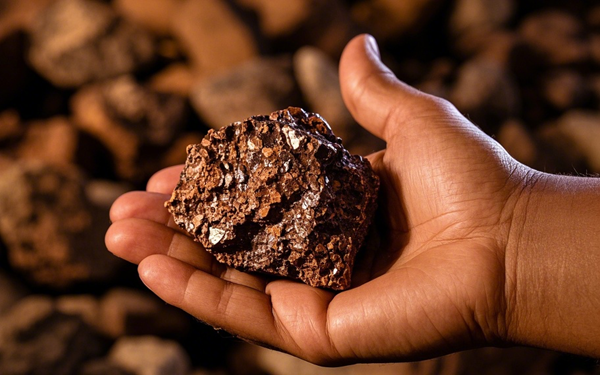
Driven by the twin engines of the global energy transition and industrial recovery, copper’s strategic value as the “backbone of industry” has never been more pronounced. In 2025, prices for the red metal surged more than 20% to record highs amid supply shortages. Adding fuel to the fire, the United States officially added copper to its list of critical minerals at the end of the year, sharpening the market’s focus on supply chain security.
While production declines in nations like Chile, Peru, and the United States were partially offset by gains in the Democratic Republic of the Congo (DRC) and Russia, the global refined copper market remains structurally undersupplied. J.P. Morgan Global Research projects a global refined copper deficit of 330,000 metric tons in 2026, with prices expected to hit $12,500 per metric ton in the second quarter, averaging approximately $12,075 for the full year. This forecast underscores a long-term tension between green demand—driven by electric vehicles and grid upgrades—and insufficient capital expenditure in mining.
Against this backdrop, the final rankings of the world’s top copper-producing countries for 2025 have been settled: Chile retains its crown, though its output continues to slip; the DRC has emerged as a rising star, climbing to second place; and China, while fourth in mine production, holds an unassailable position downstream thanks to its massive refining capacity.
In 2025, Chile produced 5.3 million metric tons of copper, accounting for 23% of global output and solidifying its position at the top. However, this figure represents a decline of 210,000 tons from 2024, as the South American mining giant grapples with falling ore grades, water scarcity, and community opposition. Although Chile’s reserves remain the world’s largest at 180 million metric tons, its inability to stem the production slide could eventually challenge its long-term dominance.
The Democratic Republic of the Congo vaulted into second place with output of 3.2 million metric tons, capturing nearly 14% of the global market. This marks the country’s second consecutive year of significant expansion—a 210,000-ton increase from 2024’s 2.99 million tons. Chinese investment in local mining operations and supporting infrastructure has cemented the DRC’s role as a primary source of global supply growth. With reserves estimated at 80 million tons, the nation’s potential remains vast.
Peru produced 2.7 million metric tons of copper in 2025, a marginal decrease of 40,000 tons from the previous year, securing its spot in third place. Although political instability and community protests have intermittently disrupted operations, overall production remains near historic highs. With new projects gradually coming online, Peru is well-positioned to maintain its status as South America’s second-largest copper producer.
China’s mine production totaled 1.8 million metric tons in 2025, placing it fourth globally and slightly below the 1.84 million tons produced in 2024. However, in the refined copper segment, China is the undisputed leader, churning out 14 million tons—a staggering 48% of the world’s total and five times the output of the second-ranked refiner, the DRC (approximately 2.8 million tons). This immense smelting capacity gives Beijing substantial sway over the midstream segment of the global copper industry and makes it a pivotal influence on international prices.
Russia’s copper output jumped to 1.3 million metric tons in 2025, a sharp increase from 1.02 million tons in 2024. The leap is largely attributed to the ramp-up of Phase 1 production at Udokan Copper’s Udokan mine in Siberia. Once fully operational, this phase is expected to produce up to 135,000 tons per year, with plans for Phase 2 potentially boosting total capacity to 450,000 tons annually. Amid Western sanctions, Moscow is increasingly pivoting its resource exports toward Asian markets.
While U.S. mine production stood at an estimated 1.0 million metric tons in 2025 (a 5% decline year-on-year), the country’s status as the world’s second-largest consumer of refined copper has driven its import reliance to 57%. Data from the U.S. Geological Survey (USGS) shows refined copper imports reached 1.7 million tons, primarily sourced from Chile (68%) and Canada (16%). In November, the U.S. officially added copper to its final 2025 list of critical minerals. This move not only underscores Washington’s anxiety over supply chain vulnerabilities but also fueled market speculation about potential tariffs, helping to push the average COMEX copper price to a record $4.80 per pound for the year.
The 2025 rankings reveal a complex picture: Chile still commands upstream resource dominance through its massive reserves and production. The DRC’s rapid ascent, however, is reshaping Africa’s mining landscape. China, though fourth in mining, controls the high ground in the midstream via its refining prowess and is increasingly extending its reach upstream through overseas investments, particularly in the DRC. Meanwhile, the U.S., as a top consumer, is leveraging policy tools like tariffs and the critical minerals list to recalibrate its supply chain security.
Looking ahead, dominance in the global copper market will no longer be defined solely by a single country’s production figures. Instead, it will be a complex amalgam of resource endowment, smelting capacity, financial clout, and geopolitical maneuvering. As the supply-demand gap persists into 2026, the competition for this critical “red metal” is poised to intensify.