Washington is pouring billions into early-stage rare earth companies, ignoring political controversies and technical risks. The reason? A Chinese industry report says America has just two months of rare earth inventory left.
The most direct and alarming answer comes from a Chinese industry report: US strategic rare earth stockpiles would last only two months under a severe supply disruption.
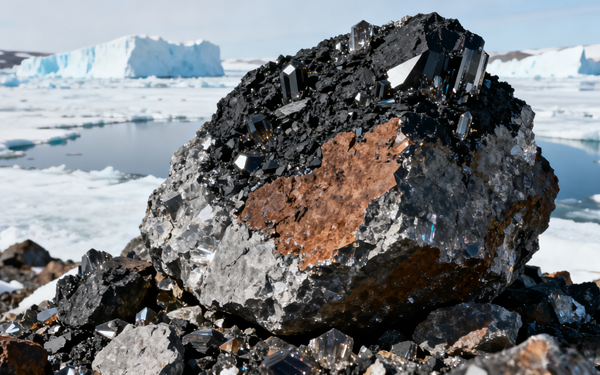
Heavy rare earths — dysprosium, terbium — are especially vulnerable. These are critical materials for missile guidance systems, radar, and stealth fighter jets. If China tightens exports further, US advanced weapon systems could face an immediate “supply cutoff.”
This is not hyperbole. In early 2026, Chinese rare earth shipments to the US fell 22.5% year-on-year, as new regulations required government approval for every export. In Europe, rare earth prices have soared to six times domestic Chinese levels. Meanwhile, just two days of recent US military operations in the Middle East consumed an estimated $5.6 billion worth of high-end munitions — depleting rare earth materials far faster than anticipated.
Facing a federal ban taking effect January 1, 2027 — which will prohibit Chinese-sourced rare earths in all US weapons systems — Washington has abandoned its traditional “wait until mature” approach. Instead, it is adopting a venture capital strategy: back multiple unproven startups simultaneously, hoping a few succeed.
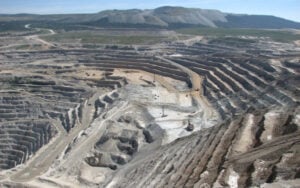
The poster child is USA Rare Earth. The company has yet to achieve commercial mining or magnet production, yet it is set to receive up to $1.6 billion. Its Round Top deposit in Texas is low-grade and mineralogically complex, with production not planned until late 2028 — well after the 2027 deadline.
Heidi Crebo-Rediker of the Council on Foreign Relations put it bluntly: “This administration is willing to take greater risks. Rather than seeing whether the government loses money on each investment, we should look at whether the money is helping build resilience.”
Better to lose money than lose supply. That is the real meaning of “whatever it takes.”
The gamble comes with serious costs.
Politically, Commerce Secretary Howard Lutnick’s family-run investment firm, Cantor Fitzgerald, has been accused of deep involvement. In a letter, Representative Zoe Lofgren warned that the proposed deal gives the Secretary “overwhelming leverage to influence a private company while promoting his sons’ interests.” Similar scrutiny has fallen on Vulcan Elements, backed by Donald Trump Jr.’s venture firm and the Pentagon.
Technically, the US still has only one rare earth mine — Mountain Pass in California — and most separation and refining still depends on China. Round Top’s low-grade ore requires a complex leaching process with no large-scale commercial precedent. Even more awkward: ReElement Technologies’ parent company, American Resources Corporation, warned last year of “substantial doubt” about its ability to continue as a going concern, while fighting a $45 million financing lawsuit.
But Washington no longer has the luxury of waiting for perfect solutions.
The root of US anxiety is China’s absolute control over heavy rare earths — 98-99% of global dysprosium and terbium supply. Even if the US restarts domestic mines, the refining stage still runs through China.
Former US Trade Representative Michael Froman, now president of the Council on Foreign Relations, acknowledged: “America can cut China off from today’s chips, but doing so would make it immeasurably harder to manufacture tomorrow’s chips and other high-tech devices.”
This is no longer an economic issue. It is a survival issue.
The State Department has enlisted over 50 countries to build alternative supply chains, and the Pentagon is pushing domestic refining capacity. But industry consensus is that building a full “mine-to-magnet” chain will take years.
Phil Ball, senior fellow at the Foundation for American Innovation, remains cautiously optimistic: “Supply is elastic. We can overcome a lot of challenges faster than policymakers in Beijing, Brussels, or Washington have come to know.”
But the countdown to 2027 has begun. Between a two-month stockpile red line and a looming policy deadline less than a year away, America’s multibillion-dollar bet is not just about money — it is about a future independent of Chinese rare earths.