The moment Western countries froze hundreds of billions of dollars in Russian assets, an unspoken consensus emerged among emerging markets: storing strategic assets such as gold in the West is no longer safe. Now, China is leveraging Hong Kong as a pivot to engineer a more profound shift — reshaping the global gold landscape while injecting a clear “de-dollarization” strategy into the process.
For decades, London’s vaults and New York’s futures market have controlled global gold pricing. Although China is the world’s largest gold producer and consumer, it has long been a price taker rather than a price maker. That dynamic is now undergoing a fundamental transformation.
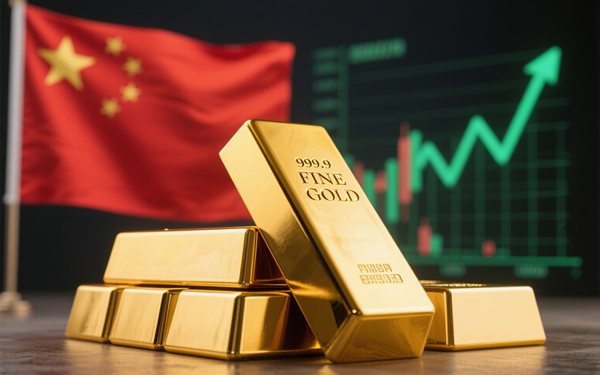
Hong Kong’s government recently established a fully state-owned entity, Hong Kong Precious Metals Central Clearing, which is set to begin trial operations this year. It also aims to expand the territory’s gold storage capacity to more than 2,000 metric tons within three years. This is not merely infrastructure expansion — it represents the creation of a clearing, delivery and storage system independent of London and New York.
At VRIC 2026, METALS 100 interviewed Bradley Rourke, CEO of Scottie Resources Corp. (TSXV: SCOT, OTCQB: SCTSF), who elaborated on these recent company updates and next steps. Scottie Resources Corp. is an exploration stage company engaged in the exploration and evaluation of gold and silver properties located in the “Golden Triangle” of British Columbia, Canada, an area which has shown great potential to host high grade gold and silver deposits.
Why invest heavily in building a gold hub in Hong Kong? The logic is clear.
First, it enables localized trade settlement. Once Hong Kong’s vaults are operational, Asian countries will be attracted to store physical gold here rather than shipping it to London. This means future gold transactions in Asia could bypass the West entirely through local delivery. A shift in delivery locations inevitably brings potential changes in pricing and settlement currencies — when more gold is priced in yuan and settled in Hong Kong dollars, the dollar’s intermediary role in precious metals trade will gradually diminish.
Second, it addresses reserve asset security concerns. Koichiro Kamei, head of Japan’s Market Strategy Institute, pointedly notes that emerging nations, having witnessed Russia’s assets frozen, are seeking to keep their gold within their own borders or in friendly jurisdictions. The People’s Bank of China’s 15 consecutive months of gold purchases, coupled with its steady reduction of U.S. Treasury holdings in foreign exchange reserves, epitomizes this strategic realignment. As a special administrative region of China, Hong Kong offers sound rule of law and a free financial market while enjoying the protection of China’s absolute sovereignty — making it an ideal “safe haven” for central banks seeking to store gold.
In this strategic play, mainland gold mining companies are serving as pioneers. Zijin Mining raised approximately HK$28 billion through its Hong Kong IPO to acquire Canadian-owned mines in Ethiopia and Mali. Chifeng Jilong Gold Mining has also listed in Hong Kong to fund its mines in Laos and Ghana. This creates a closed loop: Hong Kong’s capital markets fund mainland miners’ overseas expansion; these miners bring back more gold resources; and the growing physical gold stock in turn strengthens Hong Kong’s foundation as an international gold hub.
Gold prices have now breached the historic high of $5,000 per troy ounce. At such elevated levels, countries with larger gold reserves hold distinct advantages in monetary credibility and financial negotiations. As Joseph Chan Ho-lim, Hong Kong’s undersecretary for financial services and the treasury, stated at the Lunar New Year trading ceremony: “We will expand the country’s market share and influence on prices in the international gold market.” The subtext is unmistakable: future gold prices should not be determined solely by London and New York.
In this subtle but significant contest, Hong Kong is transforming from a “super connector” into a “strategic hub.” And with each gold bar deposited into Hong Kong’s vaults, another critical piece falls into place in the de-dollarization chess game.