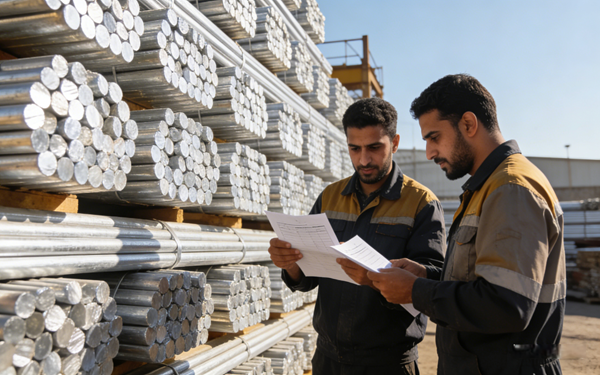
While global markets remain transfixed by the impact of shelling in the Strait of Hormuz on crude oil, a quieter but equally ubiquitous industrial metal is stealing the spotlight. Aluminum, the lightweight backbone of construction, autos, and packaging, has surged to a four-year high as the U.S.-Iran conflict throttles a critical supply chokepoint.
With roughly 9% of the world’s aluminum trade facing severe disruption and the global market already nursing a pre-war deficit, prices on the London Metal Exchange (LME) have vaulted decisively past the $3,550 per metric ton threshold.
In this geopolitical resource storm, not all players are suffering. While downstream manufacturers in Europe and Asia scramble to absorb soaring input costs, North American aluminum companies—insulated by vertical integration, renewable energy hedges, and domestic pricing power—are emerging as the conflict’s primary beneficiaries. Even if the Strait were to reopen tomorrow, industry experts warn that smelter restarts are far from a simple flip of a switch. This dynamic provides robust support for prices in the $3,500 to $3,700 range, with a sustained conflict opening the door to $4,000 aluminum.
Against this macroeconomic backdrop, we spotlight three North American-listed aluminum equities with the structural advantages to convert high spot prices directly into shareholder returns.
The Investment Case: Renewable Energy Desensitizes Cost Structure
Alcoa stands as one of the few remaining fully integrated giants, controlling the entire value chain from bauxite mining and alumina refining to aluminum smelting. Critically, the company’s strategic exit from its majority stake in Saudi Arabian Mining last year has left it with minimal exposure to the current Middle Eastern turmoil. Supply shocks to its raw material stream are, therefore, negligible.
More compelling for margin watchers is Alcoa’s power mix. Approximately 86% of its smelting capacity is fueled by renewable energy. As skyrocketing oil and natural gas prices inflate production costs for global competitors, Alcoa enjoys structural cost immunity. While JPMorgan and UBS have recently nudged their price targets higher to the $68–$70 range, with supply disruptions potentially bleeding into the third quarter, those valuations increasingly appear conservative against a backdrop of sustained spot prices above $3,500.
The Investment Case: America’s New National Security Smelter
Century Aluminum operates a network of mines in Jamaica and smelters across the U.S. and Iceland. But the real catalyst separating Century from the pack in this bull cycle is its joint venture with Emirates Global Aluminium to build a greenfield smelter in Oklahoma. This project represents the first new U.S. primary aluminum smelter built since 1980. Once operational, its projected 750,000 metric tons of annual output will effectively double domestic U.S. primary production capacity.
With the Strait of Hormuz exposing the fragility of overseas supply chains, this still-under-construction facility has undergone a profound transformation in strategic value. What was initially viewed as a shrewd commercial expansion is now being repriced by the market as a critical national security asset. For investors seeking both upside torque to aluminum prices and a premium for domestic supply security, CENX offers a compelling, long-duration narrative that is only beginning to be reflected in its share price.
The Investment Case: The Wider the Spread, The Better the Recycling Economics
Constellium is a global leader in aluminum rolled products and recycling. While the company does purchase primary aluminum, approximately half of its feedstock originates from recycled scrap. When LME spot prices breach the $3,500 psychological barrier, the spread between primary metal and scrap widens dramatically, significantly enhancing the profitability of Constellium’s recycling operations.
The company’s positioning is further strengthened by its focus on high-value aerospace and automotive applications—segments currently enjoying robust growth cycles. Underscoring this momentum, Constellium announced just this week a multiyear agreement to supply aluminum alloy extrusions to Airbus. Amid the geopolitical uncertainty choking primary metal flows from the Middle East, Constellium’s reliance on the “urban mine” reduces its sensitivity to the Strait of Hormuz. It stands out as one of the few downstream-facing manufacturers with the anti-fragile characteristics to thrive amidst soaring raw material costs.