

1911 Gold Corporation (TSXV: AUMB; OTCQX: AUMBF)
1911 Gold is Manitoba’s Gold Standard - Ready, Permitted and High-Grade 1911 Gold is an Emerging Gold Producer, with Significant Cash Flow Generation and District-Scale Growth Potential
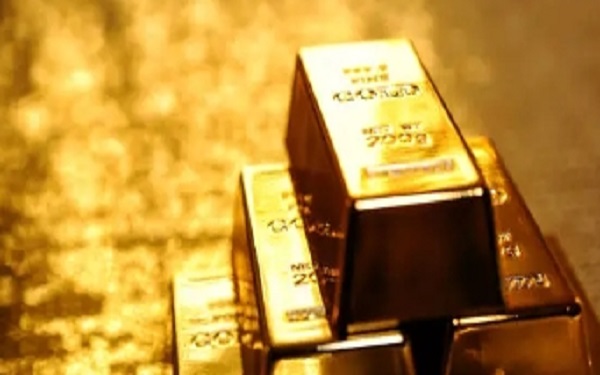
As of the close of trading on April 10, 2026, spot gold was quoted at $4,748.90 per ounce, up 1.5% on the week, marking its third consecutive weekly gain. Although gold has fallen nearly 10% from its all-time high of $5,500 per ounce set earlier this year, the recent rebound has helped repair market sentiment. Kitco data showed that after the US and Iran reached a two-week temporary ceasefire agreement on Tuesday, gold prices briefly surged above $4,800, but failed to hold those gains, indicating strong upside resistance.
The core support for this rebound comes from two fronts. First, geopolitical tensions, while eased, remain fragile. Christopher Vecchio, head of futures and forex strategy at Tastylive, pointed out that the ceasefire agreement remains “very fragile,” and it is still difficult to determine whether it will evolve into a lasting peace deal. The gold market needs a clear signal of resolution; otherwise, if the situation reverses, a return to cash-raising will pressure prices lower again.
Second, inflation expectations are fluctuating but have not yet spiraled out of control. US CPI rose 0.9% month-on-month in March, below market expectations of 1%; core CPI rose only 0.2%, up 2.6% year-on-year. The surge in gasoline prices is mainly due to supply chain issues stemming from the war and has not become broadly embedded in the broader economy.
However, these two supporting factors are also capping upside. Ole Hansen, head of commodity strategy at Saxo Bank, said that only when the Middle East conflict clearly approaches an end will the recent bullish drivers reassert themselves. Until then, inflation risks dominate interest rate expectations — markets are reducing their bets on Fed rate cuts.
Roukaya Ibrahim, chief commodity strategist at BCA Research, believes that the current geopolitical risk is essentially an “inflation shock.” Once that shock begins to weigh on economic growth, gold’s safe-haven attributes will once again come to the fore.
Looking ahead to the next phase, short-term volatility will continue to revolve around ceasefire negotiation headlines. With a light economic data calendar next week, market focus will be on several Federal Reserve speakers. TD Securities expects that the ultimate impact of the Middle East conflict on the US economy has yet to be fully absorbed, and the Fed will prioritize growth over inflation in the second half of the year, leaving room for two 25-basis-point rate cuts this year.
ANZ and Goldman Sachs maintain their long-term bullish stance, forecasting gold prices to rebound to $5,800 and $5,400 per ounce respectively by year-end, citing resilient central bank purchases (an estimated 850 tons in 2026), the trend of de-dollarization, and the lagged effect of Fed policy reversion.
Taken together, gold is at the intersection of “short-term noise” and “long-term trends.” If the ceasefire progresses smoothly and inflation remains under control, gold may consolidate in the $4,750-5,000 range. If conflict resumes or inflation expectations heat up again, the market will retest downside support.