
SLAM Exploration Ltd. (TSXV: SXL)
‘Exploring for critical elements and precious metals in New Brunswick, Canada.’
Robert Friedland, founder and co-chairman of Ivanhoe Mines, recently warned that a prolonged closure of the Strait of Hormuz could have a “profound” impact on global mining supply chains, with tightening in the sulphur and sulphuric acid markets directly constraining global copper production. Data shows that approximately 20% of global copper supply depends on leaching processes requiring sulphuric acid, while the Middle Eastern sulphur supply chain is facing the risk of disruption.
One Strait, Two Critical Supply Chains
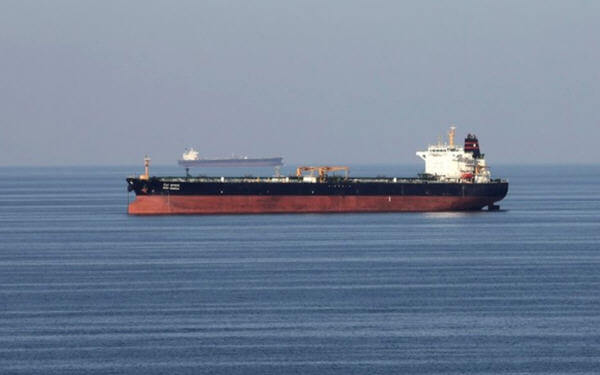
The Strait of Hormuz remains one of the most strategically important maritime routes for global commodity flows. The Middle East typically accounts for more than 40% of global sulphur supply, and sulphur is a key feedstock for producing sulphuric acid. Sulphuric acid is indispensable to the mining sector — about 20% of global copper supply relies on leaching processes that use sulphuric acid to extract copper from oxide ores.
In Ivanhoe’s first-quarter 2026 operating update, Friedland pointed out: “If the closure of the Strait of Hormuz continues, we are especially concerned about the availability of precursor materials necessary for the mining industry to continue operating. A second-derivative effect will be on global copper production due to the shortage of the world’s most important industrial chemical, sulphuric acid.”
Chinese Export Restrictions May Intensify Tightness
More concerning are reports that China, the world’s second-largest exporter of sulphuric acid after Japan, is expected to restrict exports starting May 1. Sulphuric acid, produced as a by-product of copper and zinc smelting, will see further supply tightening, exacerbating market tensions.
Friedland’s warning highlights how geopolitical tensions are increasingly affecting mining economics through supply chain dependencies on industrial chemicals, energy inputs and logistics corridors.
Ivanhoe’s “Strategic Hedge”
Against this backdrop, Ivanhoe’s Kamoa-Kakula copper complex in the Democratic Republic of Congo gains additional strategic significance. The operation hosts Africa’s largest copper smelter and is capable of producing its own sulphuric acid as a by-product of copper smelting, reducing reliance on imported acid affected by global supply disruptions.
The smelter produced 117,871 tonnes of high-strength sulphuric acid during the first quarter. Friedland emphasized: “Kamoa-Kakula is ideally positioned as a producer and seller, and therefore not a consumer, of sulphuric acid.”
Production Guidance and Industry Implications
Although Ivanhoe recently revised its near-term production outlook — now guiding 2026 copper anode output between 290,000 and 330,000 tonnes (compared with a previous forecast of 380,000 to 420,000 tonnes) — the company continues to expect annual output to reach approximately 500,000 tonnes from 2028 onward. Analysts at RBC Capital Markets noted that revenues generated from sulphuric acid sales represent a strategic advantage in the current environment of tightening supply.
Conclusion
As copper demand continues to grow alongside electrification, renewable energy expansion and grid investment, disruptions in key maritime chokepoints such as the Strait of Hormuz could have cascading effects across mining, metals and fertilizer markets. Friedland’s warning reminds the market that the chain reaction of geopolitical risk is far more complex than commonly imagined, and supply chain vulnerability is becoming a variable in mining investment.