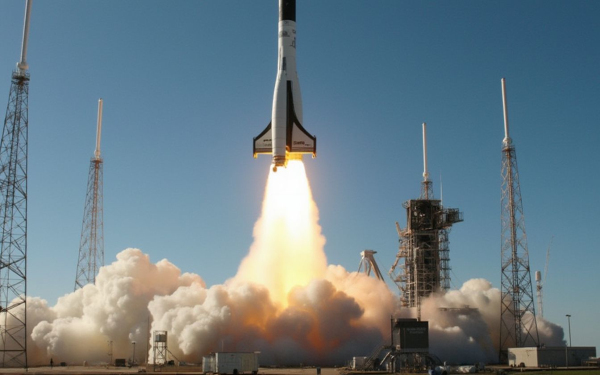
The race to take SpaceX public is sparking a rush for assets far beyond the launch pad.
With Elon Musk’s space venture reportedly targeting a valuation north of $2 trillion—a figure that would eclipse any initial public offering in history—investors are piling into the usual suspects of the space economy. But Morgan Stanley is advising clients to look in a different, dirtier place: the mine shaft.
In an April 12 research note laying out the firm’s “Space 60” framework, equity analyst Adam Jonas argued that the most tangible way to play the SpaceX halo is not through speculative satellite firms, but through the raw materials that make rockets fly and satellites function.
“All space hardware begins in the ground,” Jonas wrote. “A single satellite can use dozens of specialty metals across structural, power, thermal and communication systems.”
As the bank repositions its coverage of the broader space ecosystem, it has narrowed the upstream focus to five North American miners poised to capture the real, industrial demand behind the SpaceX IPO mania.
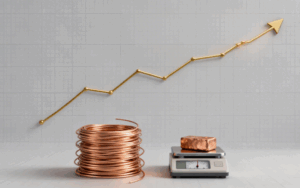
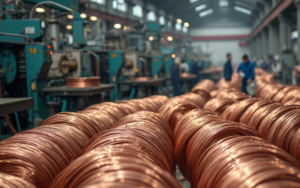
First on the list are copper giants Freeport-McMoRan (FCX) and Canadian diversified miner Teck Resources (TECK) . The bank highlights copper’s unparalleled thermal conductivity as a non-negotiable requirement for rocket engine combustion chambers. In the extreme environment of a SpaceX Raptor engine, copper alloy liners are the only thing standing between stable thrust and a costly anomaly. Teck adds another layer to the trade through its production of gallium, a niche metal essential for high-frequency space radar.
MP Materials (MP) , the only integrated rare earth producer in the United States, is flagged for its strategic supply of neodymium and praseodymium. Morgan Stanley notes these elements are critical for the high-performance permanent magnets that power everything from satellite reaction wheels to the precise servos in rocket gimbals. In a sector where supply chains are increasingly scrutinized, MP’s domestic footprint offers a distinct geopolitical advantage.
Almonty Industries (ALM) , the largest tungsten producer outside of China, rounds out the strategic metals basket. The bank points to tungsten’s extreme density and melting point as dual-purpose technology: it shields sensitive satellite electronics from cosmic radiation while also lining the throats of rocket nozzles that must withstand re-entry heat.
Finally, legacy industrial stalwart Alcoa (AA) makes the list. While less exotic than rare earths, high-strength aluminum-lithium alloy remains the literal backbone of Starship’s hull and the Dragon capsule structure. Morgan Stanley contends that Alcoa’s capacity to deliver aerospace-grade sheet and plate will be a quiet but critical determinant of SpaceX’s manufacturing cadence.
Jonas, known for his deep thematic calls, summed up the rotation succinctly: “Space is back in a big way.”
But the Wall Street veteran’s current view is notably terrestrial. The $2 trillion valuation attached to SpaceX is acting less like a tech bubble signal and more like a gravitational pull—dragging capital away from the sky and back into the ground. For investors looking for a harder edge to the space narrative, Morgan Stanley’s list points to a simple thesis: You can’t build a Starship with software alone.