Global Aluminum Market Encounters Rare Supply Crisis, Prices Aim for $4,000
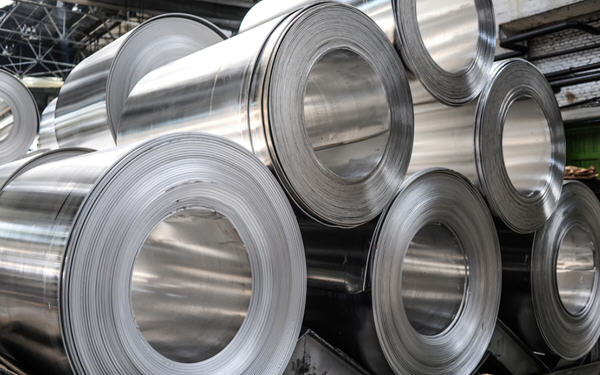
The global aluminum market is currently facing the most severe supply shock in half a century, and top Wall Street investment banks have issued unequivocal bullish signals. Citigroup predicts that driven by the strongest bullish pattern in over 50 years, aluminum prices could reach $4,000 per ton within the next three months. The metal is now confronting one of the most acute supply shortages since the 1950s.
On Monday, the bid price for aluminum spot on the London Metal Exchange stood at $3,635 per ton, having touched a four-year high of $3,767 per ton last week. Citigroup’s analysis indicates that as the likelihood of continued market tightening increases, if weak demand still fails to offset supply constraints, there is a “credible path” for aluminum prices to reach $4,000 per ton within the next three months. In the bank’s bullish scenario, the average aluminum price in 2027 would reach $5,350 per ton, an outcome estimated to have a 30% probability. JPMorgan Chase has similarly warned its clients that the global aluminum market is experiencing its largest supply deficit in over 25 years, characterizing the current situation as the market having officially entered a supply “black hole.”
The assessments of both institutions converge on a core conclusion: the logic driving this price rally does not rely on strong demand but is instead propelled by structural damage on the supply side. London aluminum prices have recently risen above $3,600 per ton, hitting a four-year high. For investors, $4,000 is now a realistic price level that is rapidly approaching.
Middle East conflict leads to capacity losses exceeding 3 million tons
The immediate trigger of the aluminum market supply crisis is the large-scale permanent loss of aluminum smelting capacity in the Middle East. According to Citigroup, citing Wood Mackenzie data, compared with pre-conflict forecasts, aluminum production projections for the Middle East have been significantly revised downward, with losses exceeding 3 million tons. More critically, the path to restarting production is highly uncertain, depending on multiple factors such as the duration of the conflict and the timeline for infrastructure repair, making a V-shaped rapid recovery in the region’s supply highly unlikely. JPMorgan Chase concludes that even if logistics through the Strait of Hormuz were restored immediately, the global aluminum market would still face severe and prolonged supply disruptions.
Supply elasticity exhausted, inventories approach historical lows
The supply losses in the Middle East are difficult to compensate for, fundamentally because the supply elasticity of the global aluminum system has been nearly exhausted. With the supply-demand gap unable to be resolved through supply flexibility, the pressure in the aluminum market must ultimately be absorbed by inventory depletion. Citigroup points out that before the crisis erupted, aluminum inventories were already at their lowest level in 55 years. Citigroup warns that under these conditions, a relatively small additional supply shortfall could trigger a disproportionate nonlinear price reaction. Only an extreme recession as severe as the global financial crisis of 2008–2009 could essentially stabilize inventory coverage levels.
Aluminum
Base Metals
Energy Metals
Financial Service
Mining