

Prismo Metals Inc. (CSE:PRIZ)
A leadership team with a proven ability to explore, operate and develop precious metal discoveries.
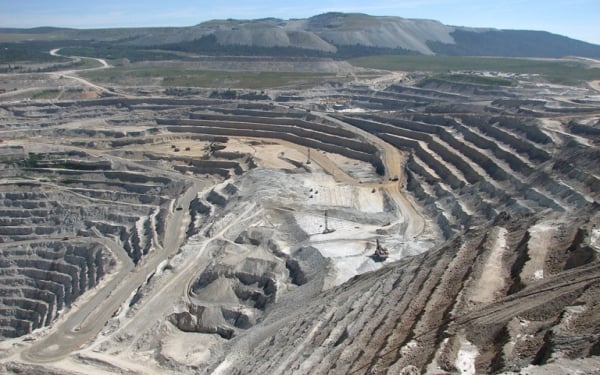
PT Freeport Indonesia, the Indonesian unit of U.S. mining giant Freeport-McMoRan Inc. (FCX), has formally pushed back the full operational restart of its Grasberg copper complex to early 2028, revising its prior target of full production by the end of 2027.
The move marks the second delay to the mine’s recovery timeline following a fatal mudflow incident in September 2025, and is set to exacerbate the tight supply-demand balance in the global copper market while reshaping copper price trends over the next two years. The Grasberg mine accounts for roughly 3% of the world’s total copper supply, making it one of the most critical assets in the global copper supply chain.
In official comments to Reuters, Freeport Indonesia spokesperson Katri Krisnati attributed the revised timeline to required additional construction work on logistics and ore handling infrastructure at the mine’s underground operations, which was damaged in the 2025 mudflow disaster.
Tony Wenas, Chief Executive Officer of Freeport Indonesia, confirmed the mine is currently operating at just 40% to 50% of its normal capacity. Alongside the full restart delay, the company has sharply downgraded its production ramp-up schedule and 2026 output targets. Previously, the miner had targeted 85% capacity by mid-2026 and full production by end-2027. The updated plan now calls for 65% capacity in the second half of 2026, 80% capacity by mid-2027, near-full capacity by the end of 2027, and sustained full operations only in early 2028. The company has also slashed its 2026 copper production target to 700,000 pounds, down from the 1 billion pound forecast laid out in its prior guidance.
The extended restart timeline is set to send ripples through the global copper market across multiple key dimensions.
On the physical spot market, the mine’s current 40%-50% operating rate equates to a 1.5% to 1.8% reduction in steady global copper supply, given its 3% pre-incident share of worldwide output. The more than 900 million pound gap between the original and revised 2026 production targets will prolong the spot market’s tight supply-demand balance through 2026 and 2027, creating sustained price support for physical copper.
In terms of market expectations, the delay has upended the prior consensus view that a supply loosening window would open with the mine’s full restart at the end of 2027. The revision has forced a full restructuring of the pricing logic for forward-dated copper futures contracts, with the previously priced-in 2027 supply increase now fully erased, driving a notable strengthening in bullish market sentiment.
For copper price trends, the delayed restart sets up a clear three-phase trajectory. In the short term through the end of 2026, the tight mine supply narrative will remain the dominant market driver, locking in a strong floor for copper prices. The supply contraction is expected to offset any cyclical fluctuations in demand, keeping copper prices in a high, range-bound pattern with limited room for deep corrections.
Over the medium term, from the second half of 2026 through the end of 2027, the market’s tight supply-demand balance will see no meaningful easing, with the mine unable to deliver sufficient incremental supply to close the global output gap. This sustained mismatch will keep copper prices biased to the upside, with a steady rise in the overall price center.
In the long term, until the mine reaches full capacity in early 2028, the global copper market will face a persistent lack of core incremental supply. Even once the mine reaches full production, the cumulative supply gap built up over the prior two years will provide lasting structural price support. The market is set to exit its prior period of loose supply conditions, entering a prolonged phase of fundamentally bullish dynamics with a sustainably elevated price center.