Mozambique Enacts Mining Law with 15% Free State Stake, Raw Mineral Export Ban
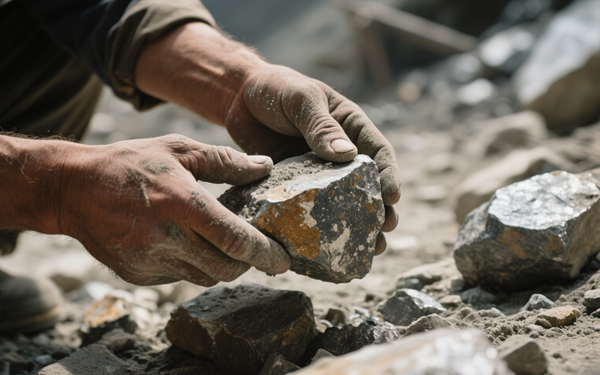
Mozambique’s President Daniel Chapo has signed a landmark mining legislation into force, following parliamentary approval back in May, rolling out two landmark regulatory pillars to boost domestic economic gains from its rich mineral reserves: compulsory 15% free government ownership across all mining projects and a blanket restriction on outbound shipments of raw or semi-finished mineral commodities.
Under statutory provisions, Mozambique’s state-owned mining firm ENM will represent the government to hold a minimum free-carried, non-dilutable 15% equity stake at every development phase along the entire value chain of any domestic mining operation, with no capital contribution required from the state. Raw and semi-processed minerals cannot be exported unless operators secure special ministerial clearance alongside verified concrete plans to develop onshore downstream processing facilities. Regulators have yet to clarify whether the new legal clauses apply retroactively to existing operational mines, most of which operate under long-term contractual frameworks. The country’s mining ministry has stayed silent on further rule interpretations to date.
Ranked as the world’s third-largest graphite producer, Mozambique hosts world-class graphite deposits anchored by the flagship Balama project in its northern territory. Graphite serves as an indispensable core raw material for lithium-ion batteries powering electric vehicles and energy storage systems. The country is also home to Montepuez, one of the globe’s largest ruby mines controlled by Gemfields, plus substantial coal assets previously owned by global miners Rio Tinto and Vale, cementing its critical standing within the global battery mineral supply chain.
The regulatory overhaul aligns with a prevailing pan-African trend of resource localization. Key mineral-rich nations including the DRC, the world’s top cobalt supplier, and Zimbabwe, Africa’s leading lithium producer, have already imposed tighter curbs on unrefined mineral exports to foster local smelting and capture higher domestic resource value. Surging global EV industry expansion has lured multinational and Asian investors into Mozambique’s graphite sector, as supply chain diversification strategies across major consuming economies further elevate the country’s strategic mineral importance.
Industry analysts note Mozambique boasts abundant mineral endowments yet faces formidable hurdles to fully operationalize its downstream processing ambitions. Persistent pain points ranging from expensive power supply, insufficient infrastructure and fragmented cross-border logistics to mounting sovereign debt pressure and unstable financing conditions hinder the smooth rollout of domestic mineral refining projects. A local aluminium smelter operated by Australian miner South32 slashed production earlier this year after breakdowns in electricity price negotiations, stoking market worries over the reliability of large-scale heavy industry in the country. Ongoing sovereign debt restructuring talks with external creditors further dampen foreign investor appetite and breed cautious market sentiment.
Near-term progress has been seen in low-tier graphite beneficiation: a graphite concentration plant backed by a Chinese mining developer kicked off commercial operations early in 2026, marking a milestone of local mineral processing advancement. Still, constrained infrastructure and financing bottlenecks make high-value advanced battery material manufacturing unfeasible in the short run. Market watchers argue Mozambique can only unlock the full economic upside of its new mining rules through steady progress on three core fronts: sustained infrastructure construction, predictable domestic energy pricing and consistent regulatory enforcement.
Notwithstanding widespread structural challenges, the ongoing upgrade of two pivotal logistics corridors—the Maputo Corridor and Nacala Corridor—paired with Japanese-led investment feasibility assessments for regional transport networks, is set to gradually improve the nation’s mineral shipping infrastructure. Graphite ore processing and mine-linked logistics services emerge as the most viable near-term investment opportunities amid the country’s evolving mining policy landscape.
Coal
Graphite
Lithium
Mining