
Southern Silver Exploration Corp. (TSXV: SSV, SSEV: SSVCL, OTCQX: SSVFF)
Southern Silver, a low-risk junior development company with substantial upside potential that is emerging as one of the premier Ag-Pb-Zn companies in Mexico
Gold stocks are rarely calm, and Agnico Eagle Mines (TSX:AEM) has just proven that point once again. The Toronto-based gold producer’s share price has fallen from a peak of roughly $349 in March 2026 to about $220 at the time of writing, a decline of nearly 40% from its all-time high, with the current market capitalization standing at approximately C$77 billion.
The ongoing pullback in gold prices has pushed the stock’s forward dividend yield to 1%. For a company that posted record profits just one quarter ago, the share price weakness offers investors an opportunity to buy on the dip.
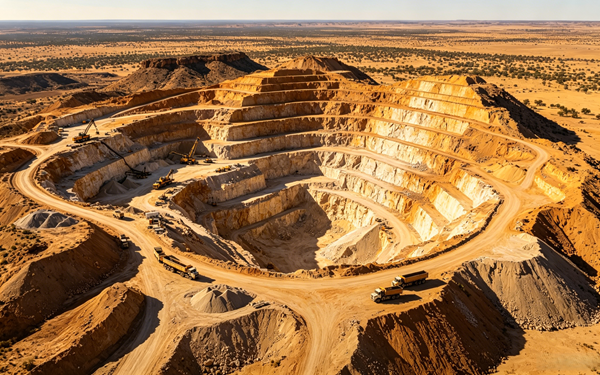
Earlier this month, Agnico Eagle reported that a large-scale rock mass movement had occurred on the north wall of the Barnat open pit at its Canadian Malartic complex in Quebec, forcing a suspension of mining at that pit, and the company consequently lowered its production guidance through 2028.
The mining halt coincided with a broader selloff in the gold market. Gold prices have fallen more than 30% from their all-time highs as investors worry that recent higher inflation data could trigger interest rate hikes. Historically, gold prices have shown a negative correlation with interest rates.
Over the past three years, on a dividend-adjusted basis, the Canadian mining stock has delivered a 230% return to shareholders. Based on consensus price targets, the stock still offers a 52% discount opportunity as of July 2026.
Agnico Eagle is the second-largest gold producer by market capitalization globally, with this year’s production target at approximately 3.4 million ounces. About two-thirds of that production comes from five mines located in the Abitibi region of Quebec and Ontario, all within 300 kilometres of one another.
Chief Financial Officer Jamie Porter stated at the BofA Securities Mining Conference in May that the concentrated footprint of the mines allows the company to share equipment, technical personnel, and supplier resources across sites. This regional operating approach keeps the company’s costs $300 to $400 per ounce below the industry average.
In the first quarter of 2026, the company produced approximately 830,000 ounces, exceeding its own budget, while achieving a record average realized gold price of $4,881 per ounce. As of the end of March, after repaying $1 billion in debt in 2025, the company held net cash of roughly $2.9 billion. Porter expects the cash position to approach $5 billion by year-end, providing ample room for growth projects and shareholder returns.
Since 1983, Agnico Eagle has paid a dividend every year, having cut it only once during that period. Management has made it clear that the dividend will remain stable even in a significantly weaker gold price environment, while share buybacks serve as a flexible tool linked to profitability and valuation.
Notably, Agnico has five internal growth projects, ]which together could add 1.5 million ounces of annual production in the coming years.
Taken together, the market is penalizing Agnico Eagle for a manageable operational event and a broader gold price correction. A company generating record cash flow, with a balance sheet near its strongest level in history, and with a dividend payment track record spanning more than 40 years, rarely remains at a 39% discount to its peak for long. Gold prices are expected to remain volatile in the near term, especially if inflation moves higher. However, for investors building long-term dividend-oriented portfolios, this pullback could serve as an entry point to begin establishing or adding to a position in Agnico Eagle shares.