Although Tesla (TSLA) delivered its best-ever quarterly performance in the second quarter, its share price dropped 7% on July 2, marking its largest single-day decline in nearly a year. Data shows that Tesla delivered 480,126 vehicles in the second quarter, a 25% increase year-over-year, far exceeding Wall Street analysts’ expectations of 406,000 units. During the same period, energy storage deployments in its energy division also rose to 13.5 GWh. However, this marks the third consecutive time the company has seen its stock price fall after releasing strong delivery figures. Market analysts believe that part of the quarter’s demand was stimulated by short-term factors, such as surging oil prices driven by geopolitical conflicts, and that some battery and truck sales involved related-party transactions with other companies owned by the founder. The sustainability of such demand remains questionable.
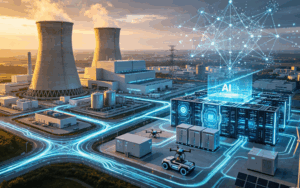
In stark contrast to the market’s cool response to the delivery data, Tesla’s stock price rose by a similar margin after it officially launched its Robotaxi service in Miami on July 3. This contrast clearly indicates that the market no longer views Tesla as a mere automobile manufacturer, and its valuation logic is shifting toward that of an artificial intelligence and robotics company. Morgan Stanley recently maintained a “Hold” rating on Tesla in a research report, with a price target of $415. The bank expects Tesla to roll out Robotaxi services in all its planned metropolitan areas, including Phoenix, Orlando, Tampa, and Las Vegas, by the end of this year. In addition, recent sightings of test vehicles in New Orleans suggest that the operational network may expand further.
Morgan Stanley has established a tracking metric based on data from the U.S. National Highway Traffic Safety Administration. The data shows that since the launch of Robotaxi, the average miles driven per accident have shown significant improvement. The bank believes that whether Tesla can continuously improve its accident rate while scaling up its fleet will become the most critical metric for investors to judge the success of its Robotaxi business. Although the absolute number of Robotaxis this year will have limited impact on profitability, the pace of their rollout will provide clearer judgment for investors who question the large-scale commercialization prospects of its autonomous driving technology. At the same time, FSD usage continues to accelerate, with cumulative miles driven reaching 10 billion as of early May.
Elon Musk has steered the company’s focus toward Cybercab, the Semi truck, and the Optimus humanoid robot, while discontinuing production of the flagship Model S and Model X to adjust production lines. This strategic transformation, while increasing the risk profile, has also changed the company’s valuation composition. In Morgan Stanley’s $415 price target, the core automotive business contributes only $45, while network services, Robotaxi mobility services, and humanoid robots are valued at $144, $125, and $60, respectively. Tesla will release its full financial report on July 22, which will be an important moment to test whether its AI strategy is supported by substantive data.