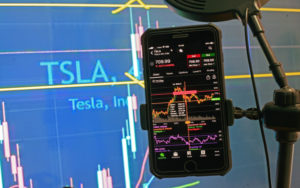

For investors seeking greater exposure to the technology assets of the world’s richest person, Elon Musk, major Wall Street asset managers have already launched multiple exchange-traded funds (ETFs) tightly linked to his ventures, with some products even employing high-leverage strategies. However, the market winds are shifting, as another cohort of institutions is now devising new investment vehicles for investors who wish to reduce or even avoid Musk-related risk allocations.
Although Musk has achieved historic breakthroughs in electric vehicles, commercial spaceflight, artificial intelligence, and satellite communications, not all investors are willing to pay the “Musk vision premium” unconditionally. They are more inclined to proactively avoid potential risks such as corporate governance concerns, political risk linkages, valuation bubbles, sharp stock price volatility, and over-reliance on a single key figure. The latest development shows that Subversive ETFs, an emerging ETF issuer on Wall Street, has filed paperwork to launch two new products that will track the Nasdaq 100 Index and the S&P 500 Index, respectively, but will exclude all affiliated companies founded, controlled, or led by Musk. The proposed ticker symbols are QQNE and SPNE.
This move represents the latest example of the ETF industry packaging investment views centered on specific individuals into tradable products. Previously, the market has seen high-leverage funds that amplify Tesla’s stock price volatility, as well as leveraged products linked to SpaceX, and even a fund once named “ELON,” which expressed a view on Musk by simultaneously going long on Tesla and shorting traditional automakers. The newest products, however, take this concept to a new level, allowing investors to hold nearly the entire benchmark index while only excluding companies associated with a single individual, thereby transforming a passive index fund into an active investment expression targeting a specific person.
Whether the “exclude Musk” investment portfolio will sustain lasting demand remains to be seen, but it underscores a broader reality in the ETF industry: as long as investors can imagine a trading strategy based on a personal viewpoint, Wall Street is increasingly confident it can package that into an ETF ticker. The launch of these products also coincides with SpaceX’s recent inclusion into the Nasdaq 100 Index, as well as indices from FTSE Russell and MSCI. The inclusion decision triggered billions of dollars in passive buying, but also drew criticism, with some investors arguing that it forces passive capital to take on highly valued, unprofitable companies before price discovery has been completed.
According to the prospectus filed on Wednesday, the fund’s sponsors explicitly cite potential corporate governance issues, political risks, and higher stock price volatility as attractions of the product, while also acknowledging that if the excluded companies continue to outperform the market, the ETF may lag behind its benchmark index. This dynamic reflects how passive investing is being reshaped by “opinionization” and “personalization.” Taking SpaceX as an example, its rapid inclusion into indices means that a large number of index fund holders are forced to hold the stock even if they do not agree with its valuation or with Musk himself.
The “de-Musk” ETF, in turn, re-segments this non-optional exposure, elevating judgments about corporate fundamentals into a tradable expression of founder credibility and key-person risk. The true significance of such products lies in providing a tool for the refined demand of “being bullish on large-cap U.S. tech stocks but unwilling to bear Musk-related risks.” It functions more as a risk-budgeting tool, helping to reduce the impact of Tesla and SpaceX events on portfolios, but at potential costs including management fees, tracking error, and foregone upside gains. Specific fee rates have not yet been determined, and investors will need to weigh whether the risk reduction achieved by excluding these stocks can offset the potential opportunity cost. This development indicates that while capital markets respect Musk’s historic achievements, they will still pass judgment on valuation realization, corporate governance, and cash-flow returns, and the “de-Musk” trade is precisely about re-channeling the emotions surrounding an individual back into quantifiable risk-asset exposure.